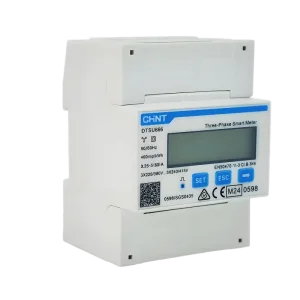
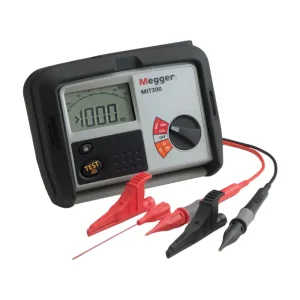
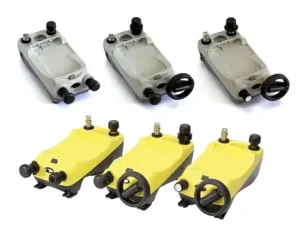
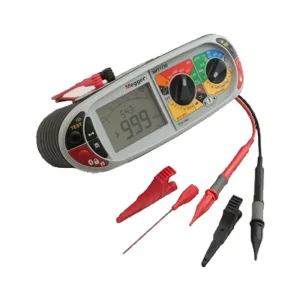
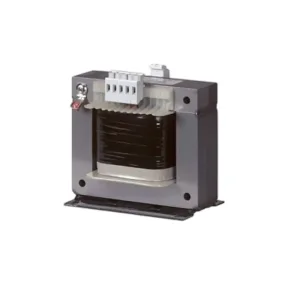
Explore our highly integrated core modules, electrical distribution nodes, and precision calibrators sourced for strategic enterprise operations.
Machine-Win Technology Co., Ltd. is a leading, international supply chain enterprise specialized in procuring, customizing, and engineering high-end electronic instrumentation, industrial control products, and custom digital synthesis systems. We bridge the gap between complex engineering needs and global device sourcing.
By collaborating directly with industry giants like KEYSIGHT, ROHDE & SCHWARZ (R&S), TEKTRONIX, KEITHLEY, RIGOL, NI, and YOKOGAWA, we supply state-of-the-art diagnostic, calibration, and analysis instrumentation. Our capacity to source and configure highly stable oscillator cores, Direct Digital Synthesis (DDS) signal boards, and custom frequency synthesizers ensures your testing systems achieve optimal phase noise limits and sub-microsecond frequency agility.
In modern electronic systems, signal purity and frequency agility are critical. Conventional analog frequency synthesis methods, such as Phase-Locked Loops (PLLs), are limited in their tuning speed, resolution, and phase continuity. To address these limitations, Direct Digital Synthesis (DDS) has become the preferred standard for high-performance waveform generation.
F_out = (M × F_clk) / 2N
Where F_out is the generated output frequency, M is the digital frequency tuning word (FTW), F_clk is the master system clock, and N is the bit-width of the phase accumulator.
A customized DDS architecture consists of four primary components working in absolute synchronization. Below is the signal propagation pipeline deployed in our custom industrial modules:
Calculates the phase value at every master clock tick. It updates by adding the Frequency Tuning Word (FTW).
Acts as a digital look-up table (LUT) to map the accumulated phase angles to their respective sine wave digital amplitudes.
Transforms the digital amplitude values back into an analog stepped output voltage waveform.
Attenuates sample-rate images, high-frequency quantisation noise, and aliases to output a clean analog signal.
The primary challenge in manufacturing custom DDS signal modules is achieving a high Spurious-Free Dynamic Range (SFDR) and low phase noise. Phase truncation occurs when the output of the accumulator is truncated to save memory space in the phase-to-amplitude converter. This introduces periodic errors, resulting in discrete spurs in the frequency domain.
To mitigate phase truncation noise and DAC non-linearities, our manufacturing partners implement advanced dithering algorithms. By introducing pseudo-random noise to the digital phase values before truncation, we convert discrete spurs into broadband white noise, lowering the spurious noise floor. In high-power RF environments, these techniques improve systemic SFDR by up to 18 dB, delivering clean signal transmission.
As automation, software-defined radio (SDR), and quantum computing continue to advance, the demand for precision DDS signals is growing rapidly across several key sectors:
DDS frequency synthesizers are used for agile channel modulation in military SDR configurations, satellite communication transceivers, and radar test equipment. Fast frequency switching (often under 200 nanoseconds) supports reliable spread-spectrum hopping.
Automatic Test Equipment (ATE) systems rely on DDS signal sources to conduct parametric characterisation of mixed-signal, RF, and high-speed memory devices. Precise phase controls enable margin verification down to fractions of a degree.
In advanced driver assistance systems (ADAS), simulating multi-target radar reflections requires phase-coherent signal generation. Real-time digital adjustments of DDS outputs allow for accurate simulation of doppler shifts.
Our focus on innovation guides our engineering and sourcing services. This roadmap highlights key milestones in DDS signal design and manufacturing through 2030:
State-of-the-art DDS architectures now integrate the direct synthesis engine with system-on-chip (SoC) architectures. This allows on-board FPGAs to dynamically calculate frequency parameters, supporting real-time digital pre-distortion (DPD) to linearise downstream power amplifiers.
Future hardware designs will move away from intermediate-frequency (IF) upconversion. Advancements in SiGe process technology and faster DAC arrays will enable direct synthesis of signals up to Ku-band and Ka-band frequencies. This transition reduces system cost, complexity, and weight in satellite applications.
Our services combine specialized engineering expertise with a global supply chain to support your instrument sales, calibration, and customization needs.
Complete lifecycles support including sales, repair, and calibration of instrumentation from leading global manufacturers (Keysight, Tektronix, R&S, Keithley, Yokogawa).
Professional network analysis, cabling verification, diagnostic solutions, and signal integrity testing to maintain robust industrial networks.
Custom electronics design, computing accessories, POF shrink film packaging systems, and complete workshop production assembly line design and optimization.
Answers to common engineering and procurement questions regarding custom DDS design and instrument sourcing.
Explore additional specialized machinery modules, digital micro-ohmmeters, and protective relays for high-voltage and low-voltage environments.

 Machine-Win