 Machine-Win
1 / 2
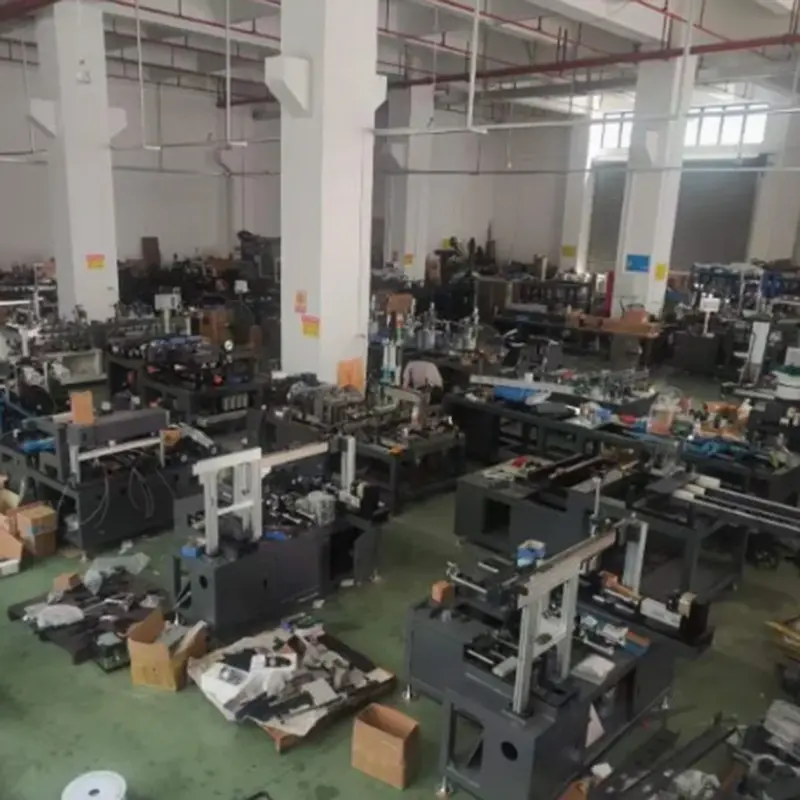
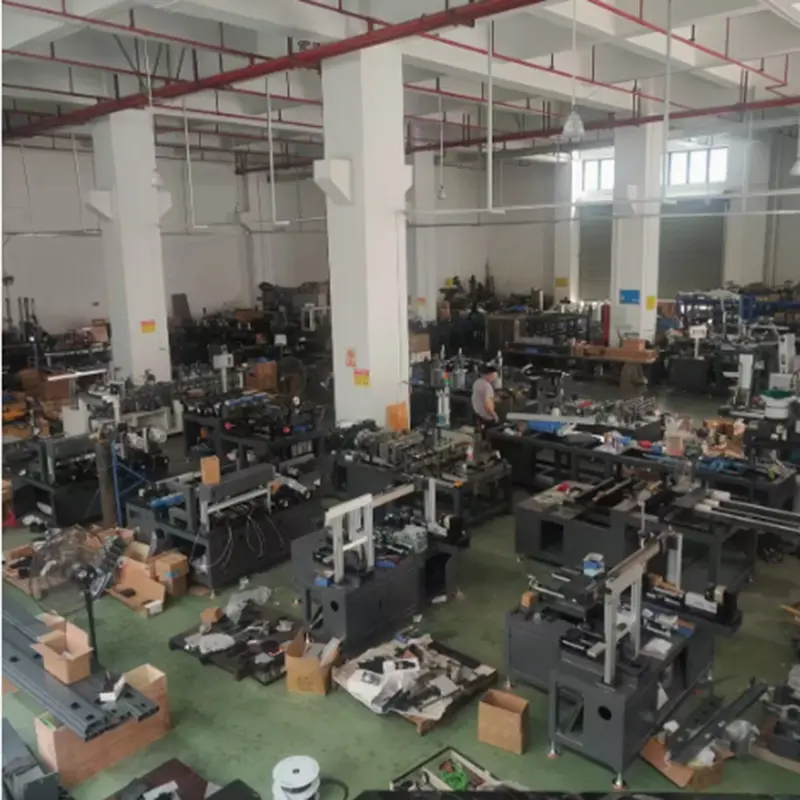
A fully automated assembly production line for gas springs and gas pressure rods integrates precision machinery, intelligent control, and real-time quality inspection. It streamlines the entire manufacturing process—from component feeding to final testing—replacing manual operations to achieve high efficiency, consistent quality, and scalable production. This equipment is critical for meeting the growing demand for gas springs in industries such as automotive, furniture, aerospace, and medical devices, where reliability and performance standards are stringent.
The line's design focuses on precision, efficiency, and flexibility, addressing the unique requirements of gas spring manufacturing (e.g., strict sealing, pressure stability):
Mechanical Accuracy: Critical stations (e.g., press-fitting, welding) use servo-driven systems and linear guides with repeat positioning accuracy of ±0.005mm, ensuring component alignment and reducing assembly errors.
Real-Time Quality Control: Embedded sensors (force, pressure, position) and vision systems monitor 10+ key parameters per unit; defective products are flagged and rejected immediately, achieving a first-pass yield (FPY) of ≥99%.
Gas Filling Precision: High-precision regulators control nitrogen filling with ±0.05 MPa accuracy, avoiding performance inconsistencies caused by pressure deviations.
Production Capacity: A standard line handles 30–60 units per minute (depending on product type), 3–5x higher than manual assembly (≈10 units/min). For large-scale production, modular designs allow capacity expansion to 100+ units/min.
Labor Savings: Replaces 15–20 manual workers per shift; only 2–3 operators are needed for line supervision and material replenishment.
Energy Efficiency: Adopts variable-frequency drives (VFDs) and low-power servo motors, reducing energy consumption by 20–30% compared to semi-automated lines.
Multi-Model Compatibility: Quick-change tooling (e.g., feeder rails, press dies) allows switching between product models (length: 100–1000mm, diameter: 10–50mm) in 30–60 minutes, adapting to small-batch, multi-spec production needs.
Modular Design: Each process stage is a standalone module (e.g., filling module, testing module) that can be added/removed based on production requirements (e.g., adding a secondary leakage test module for automotive-grade products).
Safety Systems: Equipped with light curtains, emergency stop buttons, and pressure relief valves; the line automatically shuts down if abnormal pressure or motion is detected to protect operators and equipment.
Full Traceability: Integrates MES (Manufacturing Execution System) to record component batch numbers, production time, test data, and operator ID for each product; data is stored for 1–3 years to comply with automotive IATF 16949 and aerospace AS9100 standards.
| Category | Sub-Category | Specification Details |
|---|---|---|
| Basic Production Parameters | Production Capacity | 30–60 units/min (standard configuration); up to 100+ units/min (high-speed modular expansion). Annual capacity: 1.2–3.0 million units (based on 20 shifts/week, 8 hours/shift). |
| Product Compatibility | Gas springs/gas pressure rods: Length 100–1000mm, Diameter 10–50mm, Working pressure 5–20 MPa. Supports quick model change (30–60 minutes) via interchangeable tooling. |
|
| First-Pass Yield (FPY) | ≥99% (backed by real-time in-process inspection). | |
| Core Process Equipment | Component Feeding | - Vibratory bowl feeders: Capacity 50–200 L, sorting accuracy ≥99.5%. - 6-axis robotic arms: Payload 1–5 kg, repeat positioning accuracy ±0.02mm. - Vision recognition: Resolution 2MP, recognition speed ≤0.1s/unit. |
| Precision Assembly | - Servo press: Press force 0–50 kN, positioning accuracy ±0.01mm, force-displacement monitoring (sampling rate 1000 Hz). - Torque screwdriver: Torque range 5–15 N·m, torque accuracy ±2%. |
|
| Cleaning & Drying | - Ultrasonic cleaner: Frequency 40 kHz, cleaning time 30–60s, tank capacity 50–100 L. - Hot-air dryer: Temperature 60–80°C, drying time 20–40s, air filtration class ISO 8. |
|
| Gas Filling & Sealing | - Nitrogen filling system: Purity ≥99.99%, filling pressure accuracy ±0.05 MPa, evacuation vacuum ≤50 Pa. - Laser welder: Wavelength 1064 nm, weld seam width 0.8–1.5mm, welding speed 5–20 mm/s. |
|
| Performance Testing | - Pressure holding tester: Test pressure 5–25 MPa, holding time 5–10 min, pressure drop limit ≤0.1 MPa. | |
| Leakage & Stroke | - Leakage detector: Helium mass spectrometry, sensitivity 1×10⁻⁹ Pa·m³/s. - Stroke tester: Accuracy ±0.5mm. |
|
| Marking & Sorting | - Laser marker: Fiber laser, marking speed 100–500 characters/s, marking depth 0.01–0.1mm. - Sorting system: Vision inspection (mark clarity, position), reject rate recording. |
|
| Control & Automation | Control System | PLC: Siemens S7-1500 or Rockwell Allen-Bradley CompactLogix. HMI: 10–15 inch touchscreen, real-time data display (output, defect rate, equipment status). |
| Software Integration | MES (Manufacturing Execution System) compatibility for full traceability (component batches, test data, production time). Remote monitoring: Supports OPC UA protocol for data synchronization with factory ERP. |
|
| Safety System | Light curtains (safety distance ≥150mm), emergency stop buttons (response time ≤10ms), pressure relief valves (for gas filling stations), safety interlocks for moving parts. | |
| Mechanical & Physical | Line Dimensions | Length 15–25m, Width 2–3m, Height 1.8–2.2m (varies by module count). |
| Weight | 8–15 tons (standard configuration). | |
| Structural Material | Frame: Carbon steel Q235 (powder-coated, RAL 7035). Work surfaces: 304 stainless steel (corrosion-resistant). |
|
| Environmental & Power | Operating Conditions | Temperature 10–40°C, Relative humidity 30–70% (non-condensing), Cleanliness class ISO 9 (no oil/dust contamination). |
| Power Requirements | 380V 3-phase 50/60Hz, Total power consumption 20–40 kW (varies by equipment load). | |
| Compressed Air | Pressure 0.6–0.8 MPa, Flow rate 0.5–1.0 m³/min, Air quality class ISO 8573-1:2010 (Class 4:4:3). | |
| Certifications & Compliance | Industry Standards | Complies with CE (EN ISO 13849-1), IATF 16949 (automotive-grade), AS9100 (aerospace-grade optional). Environmental compliance: EU REACH, RoHS 2.0. |
| After-Sales & Maintenance | Warranty | 12 months for equipment, 6 months for consumables (e.g., seals, sensors). |
| Maintenance Features | Self-diagnostic function for equipment faults, lubrication points with centralized oil supply, spare parts kit included. |
Models: Professional Turnkey Full Solution Machine Equipment for Full Assembly Line Producing Gas Spring Gas Lift Used on Office Chair
Structural Materials: Frame constructed from Q235 carbon steel (RAL 7035 powder coating), work surface made of 304 stainless steel (corrosion-resistant).
Delivery information typically includes delivery times, shipping methods, packaging, etc., which may vary depending on the purchase requirements and final destination.