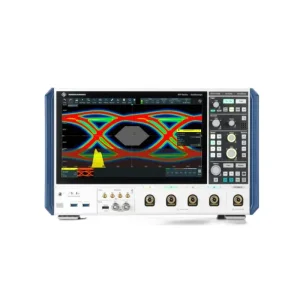
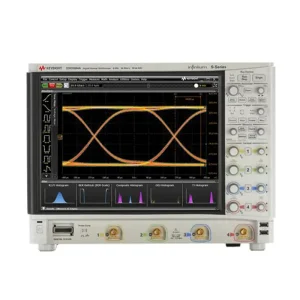
In modern electronic manufacturing, acoustics engineering, and telecom diagnostics, high-purity electrical signals within the audio spectrum (typically 20 Hz to 20 kHz, expanding up to 100 kHz or higher in custom engineering configurations) are fundamental. Audio Frequency Generators (AFG) are no longer just laboratory testing instruments; they have evolved into complex, digital-synthesized signal conditioning sub-assemblies. These units serve as critical components for testing high-definition audio components, calibrating multivariable transducers, validating data acquisition lines in aerospace telemetry, and simulating industrial automation waveforms.
Industries around the world are navigating a transition from classic analog oscillators (which offered exceptional THD performance but lacked programmatic agility) to hybrid Direct Digital Synthesis (DDS) platforms. These advanced platforms allow for micro-hertz frequency resolution, ultra-low phase noise, and fast channel modulation. Companies require customizable solutions that integrate seamlessly into rackmount automated test environments (ATE), interfaces running on Ethernet (LXI), GPIB, PXIe formats, or compact DIN-rail modules for production lines.
The convergence of RF technologies and baseband audio signals has driven several shifts in instrument requirements:
Machine-Win Technology Co., Ltd. is a professional and reliable international supply chain partner specializing in providing an extensive array of products for diverse industrial sectors. Backed by deep expertise and an extensive global supplier footprint, we excel in delivering high-quality equipment, software licenses, calibration services, and tailored hardware integration. Our focus on absolute quality control, prompt execution, and client satisfaction positions us as a trusted strategic ally in international distribution.
Machine-Win acts as a single-point strategic partner for instrument acquisition, warranty repair, traceable calibration, and complex network verification setups. We source and deliver technologies from leading test and measurement manufacturers:
To meet the requirements of next-generation physical test beds, audio signal generators must address three technical design constraints: phase noise minimization, digital distortion suppression, and multi-channel synchronization.
Modern digital systems build waveforms by indexing phase values from a lookup table at a rate dictated by a reference clock. This phase accumulator output is routed to a digital-to-analog converter (DAC). Because the DAC update rate is fixed, reconstruction filters must adjust dynamically to eliminate high-frequency aliasing artifacts (images of the baseband signal occurring near the clock frequency). In customized setups, active multi-stage Chebychev or Bessel filtering is utilized, maintaining phase linearity across the passband.
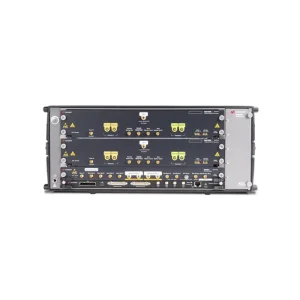
Phase noise in the local oscillator translates to amplitude jitter in the reconstructed analog domain, raising the noise floor. High-end calibration setups use atomic reference integration or crystal-controlled phase-locked loops (PLLs) to stabilize clock trees. When paired with high-performance analyzers like the *Keysight Vector Network Analyzer NA5202A*, this approach ensures accurate return loss and phase measurements without interference from phase-noise sidebands.
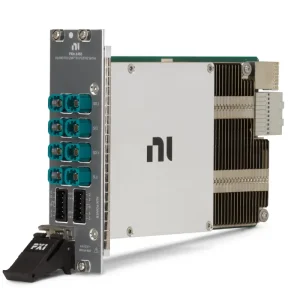
Modern production systems depend on integration with existing software architectures. Standardized instruments communicate using Standard Commands for Programmable Instruments (SCPI) via VISA libraries over TCP/IP or GPIB. In high-density automated test equipment (ATE) setups, PXI Express (PXIe) backplanes—configured with modules like the *National Instruments FlexRIO PXIe-1488*—support microsecond-level synchronization across multiple source and measurement channels.
Industrial ecosystems utilize audio-frequency signals in various customized testing setups:
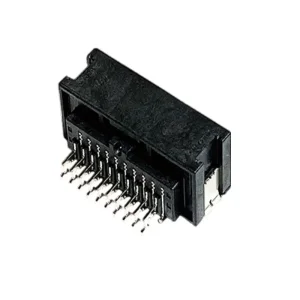
Modern vehicles rely on complex electronic networks, including Automotive Ethernet, sensor arrays, and hands-free communication systems. Designing and verifying these setups requires precise audio and vibration testing. Custom arbitrary signal setups stimulate accelerometers and cabin microphones, while board-to-board interconnects, such as the *Panasonic CF2 Series Automotive Connector*, undergo signal verification to maintain continuity under thermal stress.
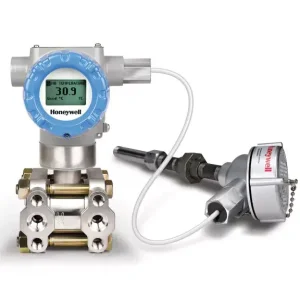
In chemical processing and manufacturing, multivariable transmitters monitor pressure, flow, and temperature. Instruments like the *Honeywell SmartLine SMV800* require precise digital loop calibration. Modulated test waves simulate standard sensor outputs, verifying the transmitter's processing circuits before installation in remote field environments.
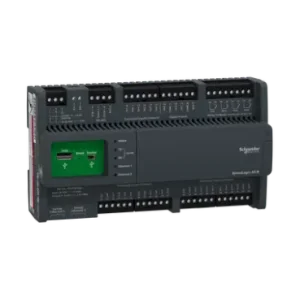
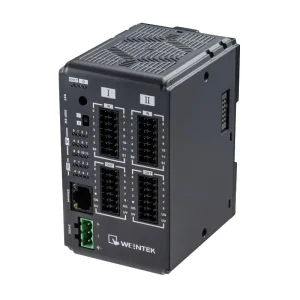
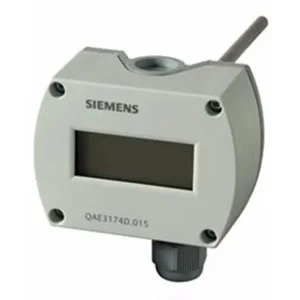
Smart infrastructure relies on integration between field sensors and management hardware. For example, using a *Siemens QAE3174D.015 Immersion Sensor* alongside a *Schneider SpaceLogic AS-B-36 Server* or a *Weintek IR-Series Ethernet I/O Module* requires systematic digital validation. Signal generators simulate complex sensor inputs, confirming that analog input modules parse, scale, and log sensor data correctly without phase lag or amplitude attenuation.
Integrating equipment sourcing, calibration management, and replacement components into a unified support channel designed for industrial operations.
We source, deliver, and support premium test and measurement instruments from leading global brands, including KEYSIGHT, Rohde & Schwarz, and Tektronix.
We offer specialized troubleshooting solutions to help clients verify data path performance, diagnose configuration anomalies, and ensure system uptime.
Our experienced support team helps resolve interface conflicts, match equipment specifications, and manage ongoing project logistics.
We maintain an inventory of original industrial electronics, machinery spares, mechanical components, and process hardware.
We analyze component lead times, coordinate international logistics, and identify cost-effective supply alternatives to keep your projects on track.
Our customer service channels provide support, coordinate express shipping, and handle priority requirements around the clock.
 Machine-Win