In modern electronics manufacturing, aerospace telecommunications, and semiconductor verification, high-fidelity signal simulation is a fundamental bottleneck. High-quality frequency synthesis tools represent the foundation upon which accurate hardware testing relies.
Signal generator functionalities have transcended the basic production of sine and square waves. Modern testing frameworks demand complex arbitrary waveform generation (AWG), phase-coherent vector signal modulation, ultra-low phase noise, and ultra-high dynamic ranges. For procurement managers and system engineering leads, securing consistent access to high-precision test instrumentation requires navigating a highly complex global supply chain.
As a global integrator, Machine-Win Technology Co., Ltd. addresses these supply bottlenecks by providing a streamlined gateway to leading instrumentation brands. We bridge the gap between engineering requirements and global logistics, ensuring access to essential measurement platforms.
Advanced instrumentation serves as a critical asset across multiple sectors. Our portfolios address high-frequency research and automated industrial process controls.
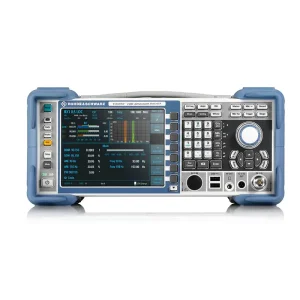
Enables high-fidelity RF simulation to test radar altimeters, transponders, and GPS receivers. Platforms like the R&S®EVSG1000 deliver specialized verification for landing systems (ILS/GBAS), ensuring compliance with international aviation safety criteria.
Utilizes ultra-wideband signal generation to simulate high-order QAM waveforms. This enables the verification of base station performance under realistic noise, fading, and interference scenarios.
Simulates millimeter-wave (mmWave) target echoes at 24GHz and 77GHz. This supports the optimization of driver-assistance radar architectures and collision-avoidance systems.
The shift towards 5G-Advanced and early 6G research has generated high demand for signal generators capable of sub-terahertz frequency synthesis. Ensuring phase synchronization across these frequencies is essential for emerging wireless technologies.
The international supply chain for electronic test and measurement hardware is marked by long manufacturer lead times, complex export compliance, and specific calibration demands.
As electronic components scale down, industrial sectors require advanced diagnostic tools. The integration of high-resolution digital systems requires signal analysis equipment to run continuously. However, supply chain disruptions can introduce production delays for OEMs who rely on direct-from-manufacturer orders.
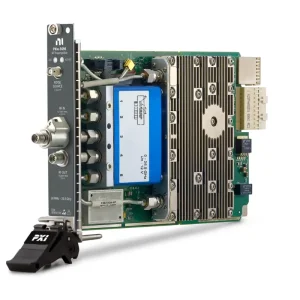
We optimize this system by maintaining relationships with major manufacturers, including Keysight Technologies, Rohde & Schwarz, and National Instruments. This allows us to supply both standard RF instrumentation and specialized modules (such as the NI PXIe-5698 amplifier) directly to global projects.
| Equipment Category | Core Parametric Benefit | Primary Industrial Use Case |
|---|---|---|
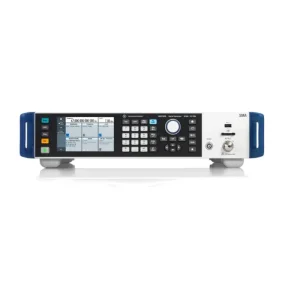
| RF Signal Generators (e.g., SMA100B) | Ultra-low phase noise, high output power up to 20 GHz | Clock synthesis, local oscillator substitution, receiver testing |
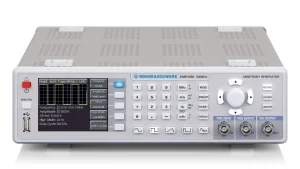
| Arbitrary Function Generators (e.g., HMF2550) | DDS technology, arbitrary waveform programming, low distortion | Analog circuit emulation, sensor simulation, educational labs |
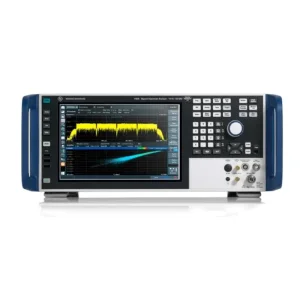
| Signal & Spectrum Analyzers (e.g., FSVA3000) | Wide analysis bandwidth, high dynamic range | Spectral emission mask verification, noise figure analysis |
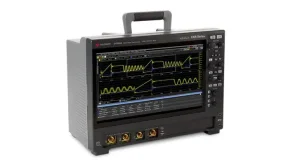
| High-Performance Oscilloscopes (e.g., EXR204A) | 4-channel analog inputs, 2 GHz bandwidth, high vertical resolution | Signal integrity verification, jitter analysis, power rail debugging |
We function as a logistics and service partner, aligning quality assurance with international technical standards.
We supply instrumentation from brands like KEYSIGHT, R&S, TEKTRONIX, and KEITHLEY. Our services cover the full procurement cycle from selection and ordering to delivery.
We deliver network testing solutions designed to verify network throughput, analyze traffic bottlenecks, and support consistent system performance.
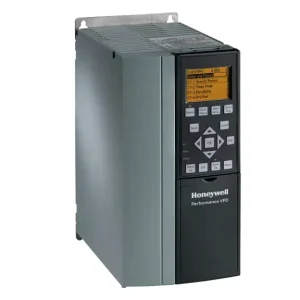
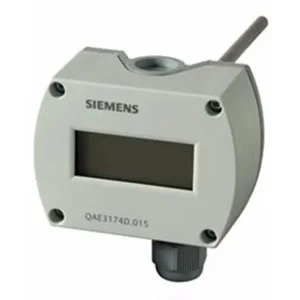
We procure original electronics and mechanical parts from brands such as SIEMENS, SCHNEIDER, MITSUBISHI, and Honeywell, verifying that each item meets manufacturer specifications.
We manage custom requirements for electronics, peripheral packaging, and production line components, aligning designs with end-market quality expectations.
We analyze component availability and lead times to optimize procurement and minimize structural logistics delays for international clients.
Our support teams are available around the clock to handle emergencies, expedite critical parts, and resolve deployment issues.
Deploying high-precision test equipment requires strict adherence to international metrology standards and local certification regulations.
Instrumentation used in manufacturing, aerospace, or automotive testing must maintain continuous calibration. We work with accredited laboratories to ensure that each shipped instrument conforms to ISO/IEC 17025 calibration standards, ensuring international traceability.
We also manage international trade compliance for specialized RF electronics. This includes processing dual-use export classifications, handling CE and FCC documentation, and coordinating customs verification. Our logistics protocols are structured to safeguard sensitive electronics during transit, preserving their calibration state upon arrival.
Advancements in communication systems and semiconductors require ongoing adaptation from instrumentation architectures.
The shift from traditional discrete analog test setups to software-defined instruments is changing how engineers approach verification. Modern AWGs utilize high-speed digital-to-analog converters (DACs) to generate complex waveforms directly at RF frequencies, minimizing the need for analog mixing stages.
Looking forward, the deployment of quantum computing architectures and optical communication networks will demand sub-picosecond jitter control and multi-channel synchronization. We track these technology shifts to ensure our product sourcing aligns with emerging development demands.
Key technical clarifications regarding signal generation hardware, calibration maintenance, and sourcing practices.
 Machine-Win