Analyzing the pivotal role of regulated direct current (DC) power sources in modern manufacturing, silicon verification, and smart grid ecosystems.
In the contemporary industrial matrix, the demand for stable, ultra-low-noise Direct Current (DC) voltage supplies has transitioned from basic utility to a critical determinant of system reliability. From high-throughput semiconductor fabrication lines to complex electric vehicle (EV) battery testbeds, precision programmable DC voltage supplies form the foundational infrastructure. Organizations globally must navigate strict regulatory frameworks and tight operational tolerances, making the selection of qualified exporters and manufacturers a major strategic decision.
The global DC voltage supply market is experiencing an unprecedented technological shift. Traditional linear power supplies, valued for their exceptionally low ripple and minimal electromagnetic interference (EMI), are being integrated with high-efficiency switching topologies. Modern power electronics now utilize wide-bandgap (WBG) materials such as Silicon Carbide (SiC) and Gallium Nitride (GaN). These compounds allow power supplies to operate at higher switching frequencies, vastly reducing physical form factors while boosting power density and efficiency past 95%.
As industrial automation shifts toward Industry 4.0 paradigms, DC power architectures are no longer passive components; they are smart nodes on industrial networks. Modbus, EtherCAT, and SCPI (Standard Commands for Programmable Instruments) interfaces enable control engineers to execute real-time telemetry tracking, voltage profiling, and protective thermal shutdowns dynamically. Consequently, global sourcing specialists look for partners capable of providing not just the hardware, but verified compatibility profiles and extensive warranty structures.
Understanding linear vs. switching topologies, programming resolution, and the critical parameters governing instrumentation design.
| Technology Class | Typical Ripple & Noise | Efficiency Range | Key Application Verticals | Limitations |
|---|---|---|---|---|
| Linear DC Power Supplies | < 0.5 mV RMS | 30% - 50% | RF Communication Test, Low-Noise Audio, Medical R&D | Heavy weight, high heat dissipation |
| Switching Regulators (SMPS) | 10 mV - 50 mV RMS | 70% - 90% | Industrial Automation, Server Racks, Telecommunications | High EMI generation |
| Programmable System Supplies | < 1 mV RMS (Hybrid) | 85%+ | Automated Test Equipment (ATE), Battery Cycling, Aerospace | Higher initial capital expenditure |
When engineering high-fidelity circuits, design engineers must pay careful attention to line regulation and load regulation. Line regulation defines a supply's capability to maintain its output voltage despite variations in the input AC line voltage. Conversely, load regulation ensures that the output voltage remains constant even as the load current fluctuates. Top-tier manufacturers utilize multi-loop analog feedback control boards paired with high-speed digital processors to keep these metrics within ±0.01% of the rated output.
Another major vector of innovation is the inclusion of multi-range output capability. Traditional power supplies limit maximum current at lower voltages, following a strict rectangular output curve. Modern autoranging DC voltage supplies provide a wider range of voltage and current combinations within the rated power envelope, allowing lab managers to replace multiple specialized power units with a single versatile instrument.
Machine-Win Technology Co., Ltd. is a professional and reliable international supply chain company specialized in delivering a wide range of premium instruments and automation components for various industries. With extensive experience and a global network of suppliers, we excel in providing high-quality products and satisfactory services. Our commitment to excellence, reliability, and customer satisfaction sets us apart as a preferred partner in the field of international trade.
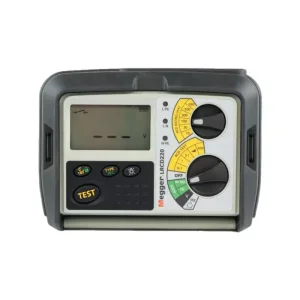
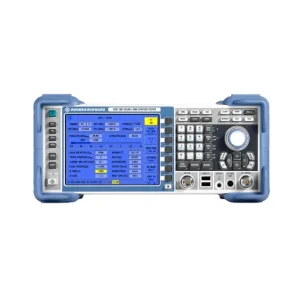
We act as a strategic ally for brand-new, original industrial brands across electronics, electricals, machinery spare parts, hardware, tools, and raw materials. Our inventory features trusted global brands including KEYSIGHT, R&S, TEKTRONIX, KEITHLEY, RIGOL, NI, MEGGER, DRUCK, YOKOGAWA, ITECH, and more.
Contact Our Sourcing Experts
How Machine-Win Technology bridges the gap between hardware manufacturers, systems integration, and post-sale calibration.
We provide comprehensive lifecycle support covering sales, specialized repairs, and traceable calibration protocols for leading multi-brand setups.
Offering advanced network analysis, signal path diagnostics, and software integrations to guarantee operational runtime without data packet loss.
Bespoke packaging, computing components, and customized hardware configurations tailored specifically to reduce client procurement overheads.
Integrating high-end instrumentation, industrial machinery spare parts, and global trade workflows into a singular client experience.
A look at digital control topologies, renewable integration, and predictive diagnostics within the modern power landscape.
The industry is moving quickly away from isolated, static power bricks toward interconnected, dynamic power sub-systems. This technological evolution centers on three main design shifts:
Traditional analog feedback loops rely on resistors and capacitors to define response times and stability margins. While robust, they lack the flexibility to adapt to changing loads dynamically. Modern programmable DC power supplies utilize high-speed Digital Signal Processors (DSPs) to run real-time adaptive control algorithms. This technology enables the power supply to adjust its control coefficients on the fly, optimizing transient recovery performance for varying load types (resistive, inductive, or capacitive).
In electric vehicle testing and grid-tied inverter design, traditional electronic loads waste energy by converting it into heat, requiring large cooling infrastructures. The latest generation of bidirectional DC voltage supplies operates as both a source and a sink. When absorbing power from a device under test (DUT)—like a discharging EV battery pack—these units convert the DC energy back into clean AC power and return it to the local utility grid. This process achieves system round-trip efficiencies of up to 96% and dramatically reduces utility costs.
By monitoring internal telemetry parameters—such as component temperature cycles, output noise trends, and cooling fan current variations—modern power platforms can predict component degradation before a system failure occurs. Sourcing high-quality DC supplies with built-in telemetry registers ensures that production systems maintain maximum runtime in continuous automated environments.
How global industries apply high-precision DC sources and calibration instrumentation to achieve design validation.
Understanding the context in which DC supplies and test gear operate is vital to selecting the right specifications. Below are three key application scenarios where premium hardware is essential:
A. Automotive Powertrain Electrification: In EV testing, high-voltage DC supplies simulate battery charge and discharge profiles under dynamic drive cycles. System voltages regularly reach 800V to 1000V. In these setups, maintaining low ripple is critical to protect sensitive traction inverters and onboard chargers from voltage spikes.
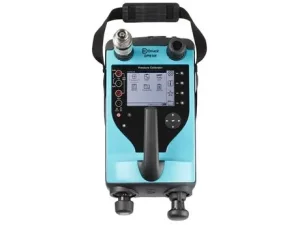
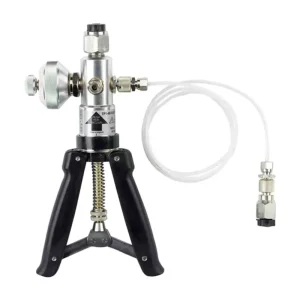
B. Aerospace Sensor Calibration & Signal Integrity: Military avionics rely on ultra-stable DC voltages to prevent signal crosstalk in navigation arrays. Using highly accurate reference calibrators like the Druck DPI610E and multimeters from Keysight guarantees that sensor signal lines are verified against recognized standards.
C. Automated Electronics Manufacturing (ATE lines): On the production floor, throughput is the primary metric. Fast programmable DC supplies must ramp up, settle, measure current draw, and power down in milliseconds. Any deviation in voltage rise time can lead to false failures or damage delicate integrated circuits.
Clear, technical answers to common questions about selecting, calibrating, and maintaining high-precision DC systems.
Linear power supplies use a series transistor operating in its linear region to regulate output voltage. This delivers exceptionally low ripple, minimal EMI, and fast transient response, but at the cost of high heat generation and low efficiency (often 30-40%). Switching power supplies (SMPS) rapidly switch power transistors between fully on and off states. This approach yields efficiencies of 80-95% and a smaller footprint, but introduces high-frequency switching noise that requires careful output filtering.
When delivering high currents, the voltage drop across the connection cables can lead to a lower voltage at the device under test (DUT) than the value set at the supply's output terminals. Remote sensing uses dedicated high-impedance sense lines connected directly at the DUT. This feedback loop allows the power supply to raise its output voltage slightly to offset lead losses, ensuring the exact target voltage is delivered to the load.
Silicon Carbide (SiC) and Gallium Nitride (GaN) devices offer higher breakdown voltages, lower internal resistance, and faster switching speeds than traditional silicon. This allows manufacturers to design switching regulators that operate at much higher frequencies. This reduction in the physical size of magnetic filtering components leads to higher power densities, reduced thermal footprints, and lower overall system costs.
Active Power Factor Correction (PFC) shapes the input current waveform to align with the mains voltage phase, keeping the power factor close to 1. This significantly reduces total harmonic distortion (THD), improves grid efficiency, and prevents voltage sag in facility wiring. This feature is often required by international standards (like EN61000-3-2) for power systems rated over 75W.
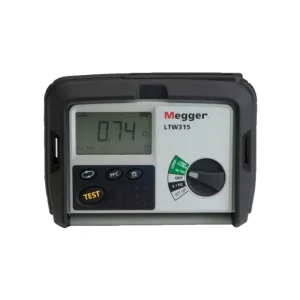
Over time, component aging causes electronic parameters to drift. Regular calibration using traceable tools—such as the Druck PV211 or Megger LTW300—ensures that the power supply's programming and readback values remain within specified tolerances. This step is critical for meeting quality control audits and preventing false passes or failures on the production line.
Yes. Many modern programmable DC supplies feature specialized battery simulation modes. These units allow users to program an output profile that mimics a battery's state-of-charge, state-of-health, and internal resistance (IR). This capability is crucial for testing battery-powered systems, portable medical devices, and electric vehicle subsystems under realistic operating conditions.
 Machine-Win