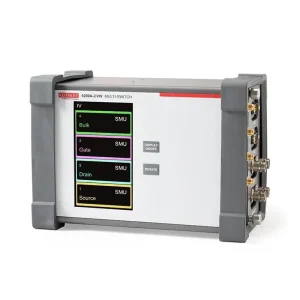
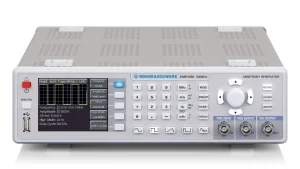
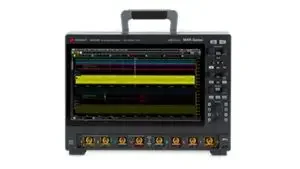
High-precision testing systems and components optimized for global manufacturing, calibration, and R&D pipelines.
A Comprehensive Technical Guide on Power Topology, Component Sourcing, and Global Grid Compliance in Modern Power Electronic Infrastructures.
A Variable Frequency Power Supply (VFPS), alternatively referred to as an AC power source or solid-state frequency changer, serves as the cornerstone for validating multi-national electrical appliances, testing avionic instrumentation, and benchmarking high-capacity industrial machines. Modern power topologies have shifted from traditional rotary motor-generator sets to advanced solid-state structures utilizing digital signal processors (DSP) and high-speed field-programmable gate arrays (FPGA).
These solid-state units carry out double conversion operations: converting incoming raw grid AC utility voltage down to a stabilized DC link voltage, and then synthesizing this DC energy back into a pure sine wave AC output via Pulse Width Modulation (PWM). Silicon Carbide (SiC) and Gallium Nitride (GaN) wide-bandgap semiconductors are rapidly superseding conventional Silicon-based IGBTs. The thermal characteristics and higher switching frequencies of SiC/GaN enable VFPS manufacturers to reduce magnetic core footprints by up to 40% while achieving power conversion efficiencies exceeding 95%.
| Technology Metric | Conventional Silicon IGBT | Next-Gen Silicon Carbide (SiC) | Theoretical Gain / Industrial Impact |
|---|---|---|---|
| Typical Switching Frequency | 8 kHz – 15 kHz | 50 kHz – 150 kHz | Allows ultra-low harmonic distortion (THD < 1%) |
| Thermal Conductivity | 1.5 W/m-K | 4.9 W/m-K | Reduces massive heat sinks, facilitating higher power density |
| Total Energy Conversion Loss | 8% – 12% | 3% – 5% | Substantially minimizes operating overheads for continuous runtime |
As the world's primary hub for power electronic manufacturing, China’s industrial ecosystem provides unparalleled supply chain advantages. Our raw material sourcing and vertical manufacturing pathways in regions like Guangdong and Zhejiang consolidate everything from high-permeability nanocrystalline cores, precision copper windings, and dynamic radiator assemblies to advanced control PCBs within a tight geographical scope.
This density of components dramatically minimizes lead times for custom variable frequency sources, enabling agile prototyping for custom voltage ranges (up to 1000V AC or higher) and tailored military-grade frequencies (such as 400Hz for aerospace ground support units). Additionally, localized access to silicon manufacturing and rapid mechanical tooling allows Chinese exporters to deliver cost-effective solutions while maintaining high structural reliability. By combining robust testing equipment with local component supply chains, Machine-Win Technology Co., Ltd. ensures that every product undergoes comprehensive validation prior to shipping.
Procurement teams selecting a variable frequency power source should focus on parameters beyond base pricing. Key technical evaluation vectors include:
Deploying variable frequency power supplies across different continents requires strict alignment with local grid setups. For instance, testing a European-configured industrial machine operating at 400V AC/50Hz using a North American 480V AC/60Hz grid requires high-performance isolation transformers and precise frequency translation.
Compliance certifications such as CE mark (LVD/EMC directives), FCC Class A, RoHS compliance, and optional UL validation confirm that electrical emissions and structural safety meet rigorous global criteria. Our engineering team helps design VFPS units that handle wide input voltage tolerances (e.g., ±15% input variation) and implement localized system configurations like Delta-Wye transformer options to protect against floating neutral lines in local industrial grids.
Modern variable frequency power systems support diverse testing setups across various industries:
Your strategic, high-integrity supply chain partner for leading electronic instrumentation, industrial components, and OEM/ODM solutions.
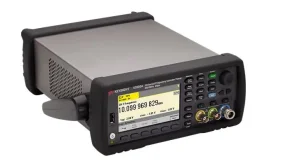
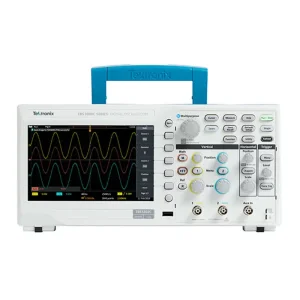
We offer comprehensive instrument solutions including sales, calibration, and repair. We supply industrial brands such as KEYSIGHT, R&S, TEKTRONIX, KEITHLEY, SIEMENS, SCHNEIDER, and OMRON, as well as high-performance custom frequency converters and power components.
Enjoy seamless sourcing support, verified authentic components, and customized OEM/ODM design capabilities. Our supply chains reduce overall procurement overhead while ensuring timely deliveries and transparent technical communication.
With decades of combined experience in international trade and precision power systems, we maintain a client-first focus. We prioritize long-term reliability and precise product execution, helping to turn complex procurement challenges into straightforward success.
Seamlessly integrating equipment, machinery spares, and customized OEM solutions.
Technical Clarifications on Selecting, Operating, and Customizing Variable Frequency Power Supplies.
Linear VFPS units offer low electrical noise and rapid transient response times, with an exceptionally low harmonic distortion signature (typically THD < 0.5%). However, they are heavy, bulky, and less energy-efficient. Switching-mode systems utilize high-speed IGBTs or SiC MOSFET switches to generate regulated outputs, achieving high efficiency (90%+) and high power density in a smaller footprint, with a typical THD of <1.5%.
Yes, our programmable AC power sources feature customized programming functionality. Users can set custom voltage steps, ramp profiles, drop-outs, and harmonic variations through the front panel control interface or via remote SCPI scripting, helping to meet testing compliance requirements like IEC 61000-4-11.
Our systems include robust protective circuitry, covering Over-Current Protection (OCP), Over-Voltage Protection (OVP), Over-Temperature Protection (OTP), Short-Circuit protection, and Under-Voltage Lockout (UVLO). The power supply will disconnect output rails within milliseconds of detecting a fault, protecting both the load equipment and the power source itself.
We analyze the installation site's grid specifications beforehand. Our designs support a wide range of input configurations (e.g., 3-phase 380V, 400V, 415V, 440V, or 480V) and are designed to handle ±10% voltage tolerances, helping to ensure drop-in grid compatibility at the target facility.
Additional high-grade industrial hardware, calibrators, and electrical interfaces supplied by Machine-Win.
 Machine-Win