High-fidelity automation components and sensors engineered to integrate seamlessly into state-of-the-art battery cycle analyzers and production test rigs across the Czech Republic.
The Czech Republic stands as one of Europe's primary industrial engines, driven heavily by its world-class automotive manufacturing base. As the European automotive sector undergoes a historic transition from internal combustion engines (ICE) to electric drivetrains, the requirement for localized, high-precision test instrumentation has scaled exponentially. Major assembly and research clusters in Bohemia and Moravia, including production centers near Mladá Boleslav, Kvasiny, and Nošovice, are transforming into integrated electromobility hubs.
In this ecosystem, battery analyzers serve as the ultimate arbiters of quality, safety, and lifespan. The battery pack is the single most expensive and safety-critical component of an electric vehicle (EV). From incoming raw cell materials to end-of-line (EOL) battery pack testing and eventual second-life evaluation, robust analytical equipment is required. These systems perform complex operations: verifying Electrochemical Impedance Spectroscopy (EIS) curves, analyzing State of Health (SOH), calibrating active and passive Battery Management Systems (BMS), and validating performance under dynamic load profiles.
Furthermore, Czech industrial entities are bound by strict European Union regulations, such as the upcoming EU Battery Passport mandates and safety protocols outlined in UNECE R100. Local manufacturers, custom pack assemblers, and grid-scale energy storage providers must utilize certified instrumentation to verify compliance, making direct supply-chain access to high-end manufacturers and exporters critical to maintaining operational agility and technological competitiveness.
On a global scale, the battery analyzer market is moving rapidly beyond static resistance/voltage meters. Modern diagnostic architecture integrates dynamic multi-frequency EIS to map cell internal structures, identify anode lithium plating, and detect mechanical micro-faults within the electrode stack. The development of diverse chemistries, such as Lithium Iron Phosphate (LFP), Nickel Manganese Cobalt (NMC), Sodium-ion (Na-ion), and emerging Solid-State variations, demands flexible, software-defined testing hardware capable of updating algorithm parameters on the fly.
In the Czech Republic, the rise of domestic battery integration facilities and secondary energy storage innovators (e.g., stationary battery packs utilizing repurposed EV battery cells) highlights two local trends:
Machine-Win Technology Co., Ltd. is a professional, reliable international supply chain and technological instrumentation provider. We specialize in sourcing and delivering a comprehensive range of electrical testing systems, automation interfaces, and high-performance calibration instrumentation to meet the rigorous testing demands of modern B2B industries.
We act as a critical bridge between Tier-1 precision test and measurement brands and local engineering teams throughout the Czech Republic. By combining direct access to international manufacturing networks with specialized industry expertise, we ensure that your development laboratories, Quality Control departments, and production lines are equipped with original, calibrated, and high-precision testing hardware.

Why automotive OEMs and electronic system integrators in Prague, Brno, and Ostrava choose Machine-Win Technology.
Deploying appropriate test architectures depends on the specific operational environment within the regional market. We typically see three main scenarios requiring high-performance instrumentation:
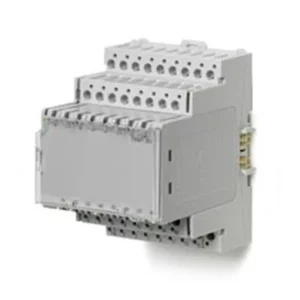
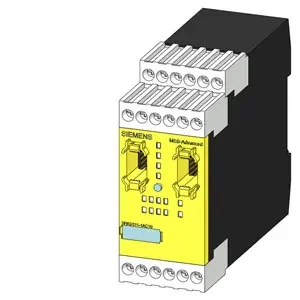
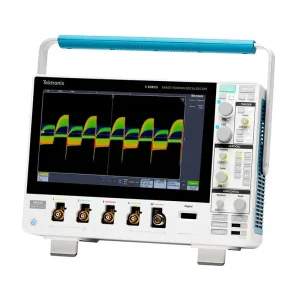
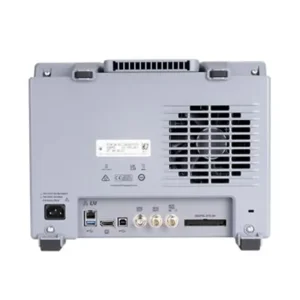
During the final assembly of battery packs for EV passenger cars, the finished module must be subjected to a rapid sequence of safety and functional checks. The test platform utilizes digital input modules (like the Siemens TXM1.8D) to monitor safety interlocks and limit switches, while precision oscilloscopes monitor high-speed CAN/LIN/Ethernet bus communication from the BMS during diagnostic handshakes. Standard testing parameters include insulation resistance testing, pulse power profiling, and contactor operation testing using rugged systems designed for continuous operation.
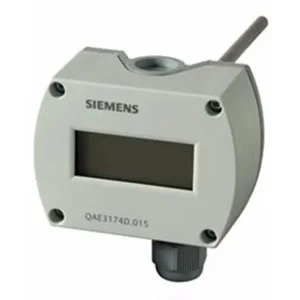
Grid-scale projects require regular maintenance validation. Field engineers employ battery analyzers to identify weak cells within serial strings. Because thermal runaways represent a significant risk for indoor storage containers, immersion temperature sensors (such as Siemens QAE3174D.015) are integrated directly with local diagnostic modules to correlate capacity drop-offs with thermal gradients across the storage architecture.
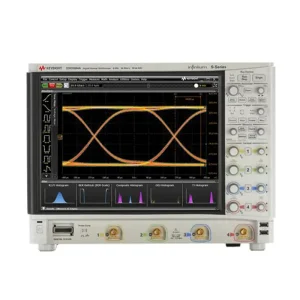
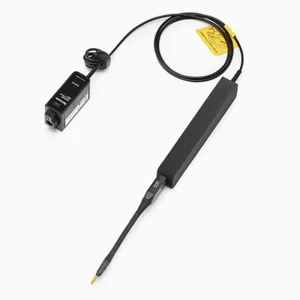
Academic institutions and technology incubators focus on the boundaries of cell lifetime models. Here, the instrumentation requirements shift toward raw measurement performance. Researchers require isolated current probes (such as Tektronix IsoVu TICP series) to capture ultra-high-frequency, high-voltage switching events without distortion from common-mode noise. This enables the exact mapping of transient impedance behaviors inside candidate cells.
Understanding the internal health of a cell requires measuring both physical parameters (temperature, pressure) and electro-chemical variables. The chart below details the diagnostic stages and the typical instruments deployed to monitor them:
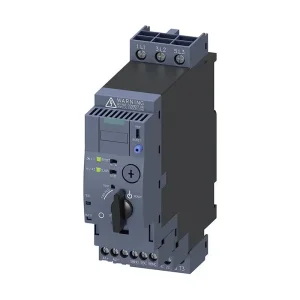
As a global supply partner, Machine-Win Technology Co., Ltd. does not simply ship standard testing hardware. We offer customized packaging solutions that include all physical mounting components, cabling, high-voltage contactor systems (using components like Siemens Sirius compact starters), and control PLCs. Our engineering team helps Czech clients build clean, automated environments where testing sequences are managed seamlessly. With 24/7 customer service and customized OEM/ODM sourcing pipelines, we help local operations minimize downtime and accelerate product validation cycles.
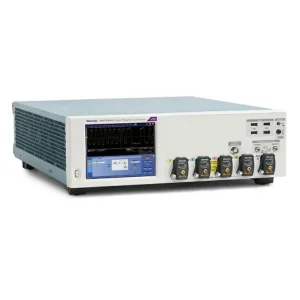
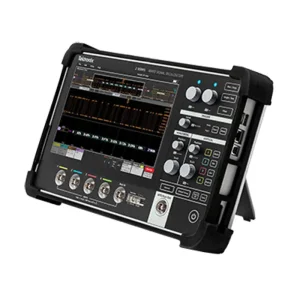
Original, high-accuracy digitizers, oscilloscopes, and protection modules optimized for battery management systems (BMS) diagnostics in Central Europe.
Essential semantic insights regarding testing frameworks, local logistics support, and calibration requirements inside the EU.
All testing platforms must adhere to European safety directives (such as CE marking), the Battery Directive 2006/66/EC (and its updated replacement EU 2023/1542), and vehicle-specific standards like UNECE Regulation 100 (R100). For stationary setups, equipment needs to satisfy EN 62485-2 safety regulations for secondary batteries. Sourced modules must support emergency cutoff limits integrated via SIL2/SIL3 functional safety loops using safety relays like the Siemens 3RK3 modular systems.
Static voltage checking cannot reveal internal health issues like micro-dendrite growth, contact resistance decay, or mechanical shifts inside active materials. EIS injects multi-frequency AC currents into the cells, recording voltage responses to separate ohmic, charge-transfer, and diffusion resistances. Analyzing these components helps sorting facilities in Czech regions identify degrading components quickly, which is critical for safety validation before repurposing cells into grid storage.
Yes. Modern industrial execution systems require test results to link directly with product serial numbers to comply with the EU Battery Passport mandate. Through Siemens Simatic platforms, Keysight connectivity bridges, and custom industrial PCs, our instrumentation fits into OPC UA, Modbus TCP, and Profinet networks, providing clean, structured data transfers to your Manufacturing Execution Systems (MES).
We handle all international shipping requirements, including customs clearance protocols for import into the Czech Republic and wider Central Europe. To guarantee traceabilty, products from brands like Keysight and Tektronix can be ordered with manufacturer-authorized calibration certificates (such as NIST or DKD/DAkkS equivalent standards) to verify immediate operational compliance upon arrival at your factory or laboratory.
 Machine-Win