Explore our high-performance voltage signal generators, industrial calibration instruments, and advanced automation components sourced directly from leading global manufacturers.
Machine-Win Technology Co., Ltd. is a professional and reliable international supply chain enterprise specialized in providing a wide range of industrial products and solutions for various sectors. With extensive experience and a globally interconnected network of premier suppliers, we excel in delivering high-quality products and highly satisfactory services. Our persistent commitment to operational excellence, engineering reliability, and proactive customer satisfaction sets us apart as a preferred partner in the field of international industrial trade.
We operate as a dynamic partner for instrument sales, repair, and calibration, as well as complex network testing systems. By bridging the gap between state-of-the-art instrument manufacturers and regional system integrators, we deliver top-tier brands like KEYSIGHT, R&S, TEKTRONIX, KEITHLEY, RIGOL, NI, MEGGER, DRUCK, YOKOGAWA, and ITECH. From multi-channel loop calibrators to precision voltage signal generators, our portfolio offers the highest degree of metrological standard compliance and accuracy needed for contemporary smart factory environments.
Request Sourcing Consultation
Understanding the architecture, technical requirements, and strategic selection of voltage and current source standards for mission-critical calibrators.
Modern industrial voltage signal generators utilize high-precision Delta-Sigma or R-2R ladder Digital-to-Analog Converters (DACs) to provide up to 24-bit resolution. This level of granularity is crucial for testing industrial programmable logic controllers (PLCs), distributed control systems (DCSs), and data acquisition modules, ensuring minimal quantization noise and optimal linearity.
Commercial signal generators must support both voltage output modes (typically 0-10V, 0-5V, ±10V) and active/passive current loop simulation (4-20mA, 0-22mA). This dual-mode capacity enables field instrumentation engineers to calibrate pressure transmitters, flow sensors, and actuators without changing equipment platforms.
Electromagnetic interference (EMI) and ground loops pose significant risks in industrial deployments. Advanced signal sources utilize optoelectronic or magnetic isolation barriers (up to 3000V RMS) to separate internal logic control circuits from external analog loops, safeguarding sensitive test instrumentation and connected machinery.
Information Gain Insight: The efficacy of a voltage signal generator in high-precision environments is determined by its temperature coefficient (tempco) and long-term stability profile. Enterprise-grade suppliers must supply data on drift metrics (e.g., < 5 ppm/°C) to prevent systemic measurement skew during continuous automation tests.
In an era dominated by Industry 4.0, smart manufacturing, and IoT-driven telemetry, accurate analog signaling remains the physical layer foundation. Almost all primary field sensors—measuring physical parameters like temperature, pressure, force, and fluid velocity—eventually output analog signals in the range of 0-10V or 4-20mA. Ensuring that the recipient controllers interpret these signals down to the millivolt or microampere level requires calibration sources that are one to two orders of magnitude more accurate than the controllers themselves.
This is where our curated selection of high-fidelity signal sources becomes essential. By relying on Machine-Win's rigorous vetting process, our industrial clients receive units capable of simulating real-world sensor profiles, analyzing loop impedance, and performing step-and-ramp diagnostic outputs designed for system strain-testing.
Global enterprise procurement is no longer just about transactional savings. In the modern landscape, resilience, lead time predictability, component quality, and localized compliance constitute the critical vectors of purchasing efficacy. China's industrial hardware and testing instrument supply chains provide unparalleled infrastructure capabilities that go far beyond basic manufacturing.
By leveraging established industrial clusters in regions such as Shenzhen, Ningbo, and the Yangtze River Delta, we utilize a dense network of sub-component manufacturers. This proximity allows for rapid prototyping, seamless integration of specialized microchips, and immediate scaling from batch sampling to bulk wholesale orders.
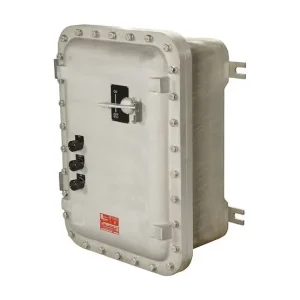
Machine-Win Technology serves as a strategic ally in custom OEM/ODM solutions. Whether adjusting enclosure designs for hazardous environments, optimizing input/output protection circuits, or tailoring custom firmware protocols for legacy systems, our supply network adapts efficiently to user technical briefs.
We implement a multi-stage QA validation framework. Every instrument batch, whether standard voltage signal generators, digital multimeters, or custom industrial controllers, undergoes strict bench testing, calibration alignment verification, and environmental stress screening before international dispatch.
A key friction point for global enterprises sourcing diagnostic and calibration systems is localized metrology compliance. A device configured in one territory may fail to satisfy regional requirements in another. To address this, Machine-Win provides deep technical support to ensure all systems conform to international standards such as:
By matching hardware attributes to regional safety regulations and documentation requirements, we insulate our procurement partners from expensive customs delays, import audits, or site safety inspection failures.
As industrial ecosystems shift towards digital transformation, the application footprint of precision signal generators is expanding from traditional laboratories to complex localized industrial environments:
Commissioning engineers use voltage signal calibrators to simulate physical sensor values (like raw thermocouple voltage) to confirm the alarm and shutoff logic inside distributed control systems before startup.
Automotive testing facilities simulate throttle position, oxygen concentration, and manifold pressure sensors using voltage signals, verifying the ECU's response over dynamic driving profiles.
Calibrating isolated pressure and flow instrumentation in marine environments, petroleum processing platforms, and chemical manufacturing lines requires highly ruggedized, portable loop calibrators.
The industrial test and measurement landscape is evolving. Traditional manual analog dial generators are being replaced by smart calibration devices. Key developments include:
Why procurement teams and laboratory managers choose Machine-Win Technology as their supply chain partner.
We provide comprehensive equipment lifecycle support—encompassing procurement, sales, professional repair calibration, and performance diagnostics—to maximize the return on your technical capital.
Leveraging deep component networks and trade expertise, we source high-quality, cost-effective options, optimize lead times, and streamline supply chains to reduce your overall Total Cost of Ownership (TCO).
We maintain strict product integrity standards, guaranteeing brand-new, original industrial equipment and replacement parts from top-tier global manufacturers.
Our responsive support teams are available around the clock to address urgent inventory needs, deliver fast shipping solutions, and coordinate quick customs clearance.
Expert answers addressing the selection, accuracy, and operational applications of industrial voltage signal sources.
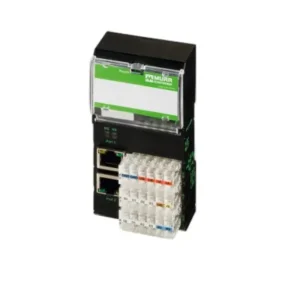
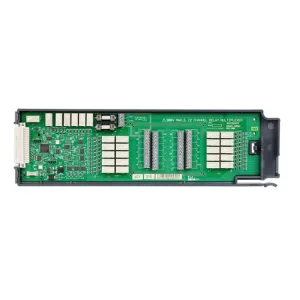
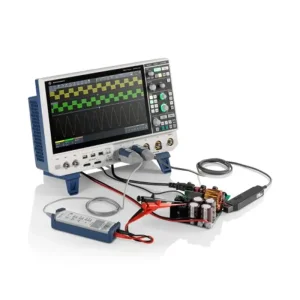
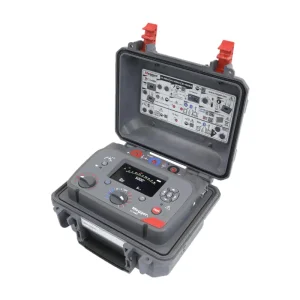
Browse our selection of signal multiplexers, safety logic units, smart gas meters, oscilloscopes, and insulation testers, complete with original manufacturer warranties.
 Machine-Win