Explore our high-precision electrical assessment, signal routing, and transient monitoring modules sourced directly from leading calibration-grade global manufacturers.
Machine-Win Technology Co., Ltd. is a globally recognized and highly reliable supply chain partner, specializing in the precision export of testing, diagnostic, calibration, and automation hardware. In modern industrial manufacturing, electrical testing—specifically impedance test validation—serves as the baseline requirement for quality assurance, environmental compliance, and safe operating architectures.
As global industries pivot toward higher power densities, smart grids, and electric transport platforms, validating the internal resistance, complex impedance, and signal integrity of circuits is no longer optional. By partnering with leading brands, we ensure engineering teams have direct access to traceable testing systems that perform under strict industrial constraints.

In power systems, electrochemistry, and RF layout configurations, impedance (denoted as $Z = R + jX$) is the fundamental measurement parameter governing circuit efficiency and safety. Impedance Testing determines the vector relationship between voltage and current across variable frequencies. As an authorized exporter, Machine-Win Technology supports primary industrial sectors with custom-engineered metrology arrays:
Using Electrochemical Impedance Spectroscopy (EIS), our systems measure the state-of-charge (SoC) and state-of-health (SoH) of lithium-ion batteries. This detects internal degradation, localized anode deposition, and electrolytic variance.
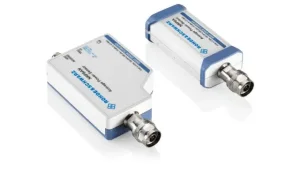
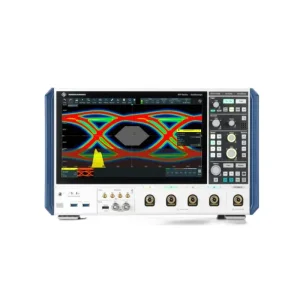
High-frequency components demand precise characteristic trace matching (commonly 50Ω or 75Ω). We provide RF oscilloscopes and analyzers from Rohde & Schwarz to resolve impedance mismatch and prevent signal distortion.
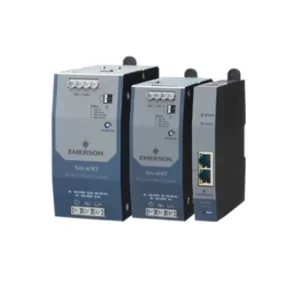
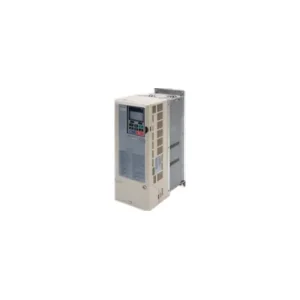
Measuring grid impedance identifies harmonic distortions and system stability issues. Our industrial automation products support heavy-duty power supplies, drive arrays, and load testing configurations.
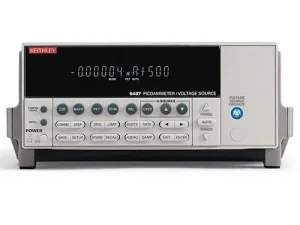
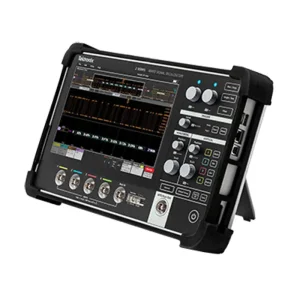
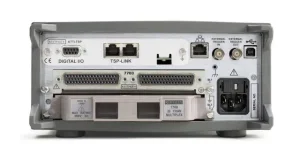
Dynamic impedence matching minimizes standing waves and power reflections. Using low-tolerance test instrumentation like the Keithley Picoammeter arrays and Tektronix MSO series allows engineers to pinpoint parasitics down to the pico-farad and nano-henry levels.
The design requirements for test equipment are changing quickly. Industry transitions toward wide-bandgap semiconductors (such as Silicon Carbide [SiC] and Gallium Nitride [GaN]) force testing devices to measure impedance at high frequencies and high currents.
As switching frequencies exceed 1 MHz, parasitics in electrical networks become challenging to control. Future validation relies on systems that integrate real-time software diagnostics with broad-spectrum sweep capabilities, ensuring that system connections are clean and calibrated.
Exporting measurement equipment requires strict adherence to international electrical safety regulations. Machine-Win Technology verifies that all shipped components comply with standard safety certifications.
Real-world applications showing how high-precision measurement components solve engineering problems.
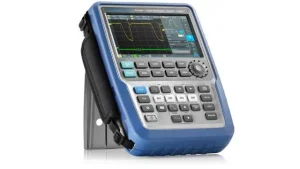
Avionics systems operating under low air densities require high-isolation testing. Using Rohde & Schwarz oscilloscopes and custom Keithley picoammeter matrices helps engineers isolate and check small leakage currents and track insulation degradation.
Battery pack assembly lines require matching cell internal resistances down to 0.1 milli-ohm. High-speed measurement instruments check and group cells dynamically, improving overall pack life and thermal balance.
To connect variable solar generation directly to grid networks, inverters must regulate dynamic output impedances. High-accuracy current and voltage tracking prevents grid resonance and harmonics.
Detailed answers to technical questions about impedance measurement and procurement.
At high speeds, standard wiring displays inductive and capacitive qualities. This changes circuit behavior, creating signal reflections. Testing checks these paths to ensure signals remain clean and stable.
A picoammeter measures very low leakage currents when high voltages are applied. This data helps engineers calculate accurate resistance values for insulation and semiconductor layers.
Yes, we supply factory-original calibration reports traceable to international metrology frameworks (like NIST, DKD, or CNAS). This ensures the hardware meets local regulatory standards immediately.
We use static-shielded packaging, double-wall heavy cartons, and shock-indicating transit indicators. This prevents damage from movement or electrostatic discharge during shipping.
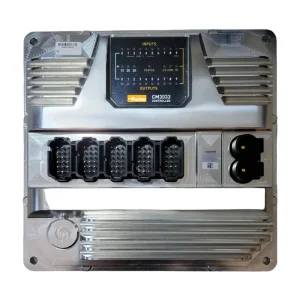
Yes. Many of our industrial controllers and signal converters are rated for extended operating temperatures (-40°C to +85°C), making them suitable for field applications and test chambers.
Discover our industrial power distribution, signal conversion, and high-durability process equipment designed for manufacturing environments.
 Machine-Win