Best Keysight E4413A Power Sensor, E-Series, Wide Dynamic Range Suppliers, Exporters

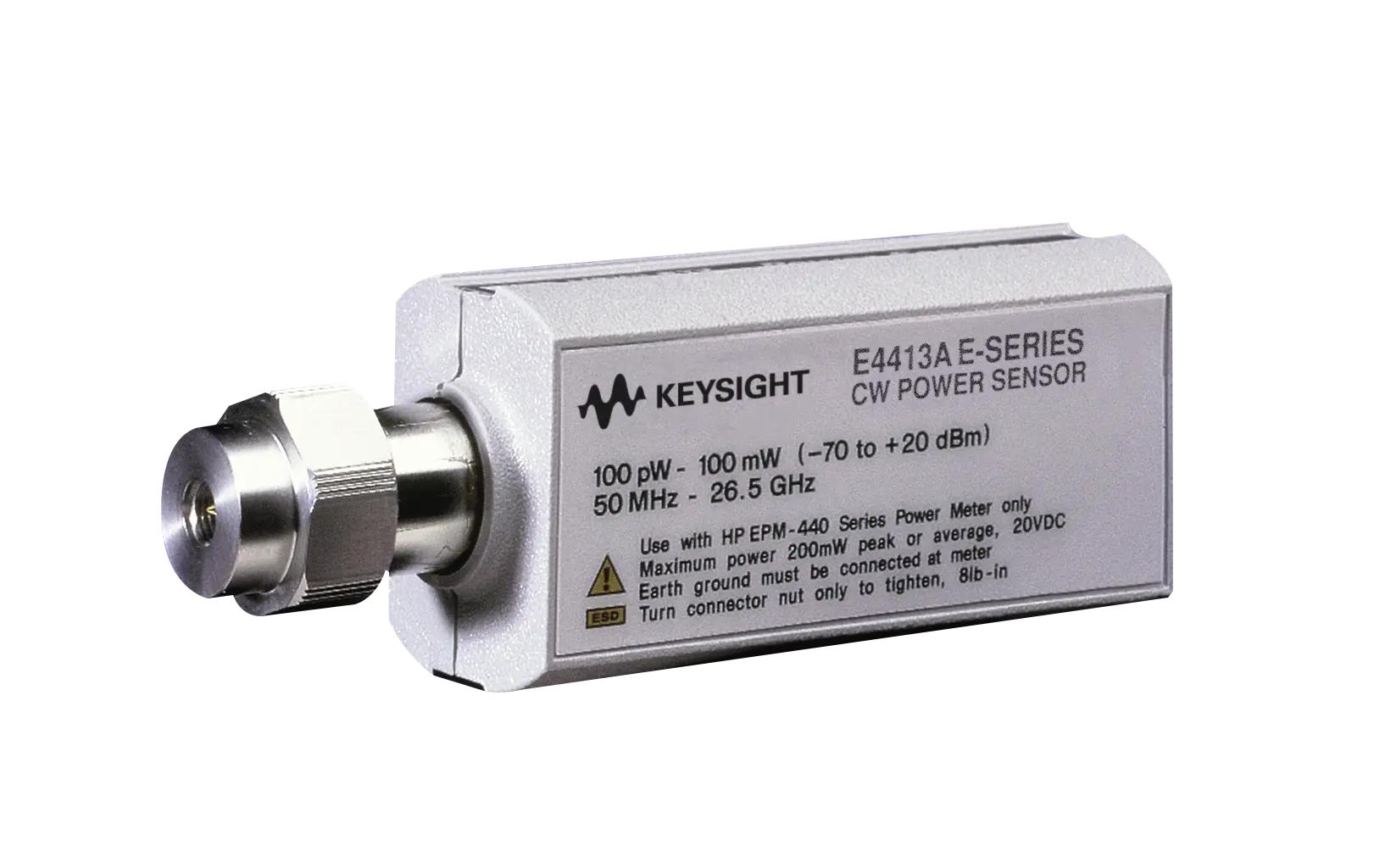
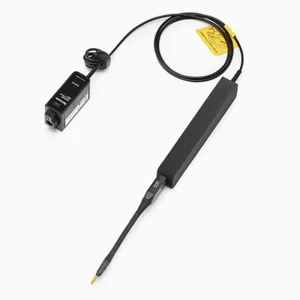
Over the frequency range of 50 MHz to 26.5 GHz and the power range of -70 to +20 dBm (90 dB dynamic range), the E4413A CW power sensor detects average power.

Product Description

📊Key Points & Overview
  • Range of frequencies: 50 MHz to 26.5 GHz
  • Broad dynamic range between -70 and +20 dBm.
  • Average power is measured by a CW power sensor.
  • 400 readings per second is a fast measuring speed.
  • EEPROM is used to store temperature compensation data, linearity, and calibration factors.
  • Outstanding SWR for lowering the uncertainty of mismatches
  • Precise calibration and NIST traceability
  • Equivalent to EPM-P (E4416A/17A), P-series (N1911A/12A), and EPM (N1913B/14B, N1913A/14A, and E4418B/19B) power meters
⚙️Specifications
POWER METERS
Category Model N432A N1913A/14A EMP N1911A/12A & N8262A P-Series E4416A/17A EPM-P Product Description / Sensor Tech. Frequency Range Power Range
E-Series CW-only sensors E4412A - Diode Power Sensor 10 MHz to 18 GHz -70 dBm (100 pW) to +20 dBm (100 mW)
E4413A - 50 MHz to 26.5 GHz
📋Manuals & Resources
FD-615MT Specs.pdf
Power Meters and Power Sensors.pdf
💬Frequently Asked Questions
What is the frequency range of the E4413A power sensor?
The E4413A power sensor operates over a wide frequency range of 50 MHz to 26.5 GHz.
What is the dynamic range for these E-Series CW-only sensors?
These sensors provide a broad dynamic range measuring from -70 dBm (100 pW) to +20 dBm (100 mW).
Which power meters are compatible with these sensors?
They are compatible with EPM-P (E4416A/17A), P-series (N1911A/12A), and EPM (N1913B/14B, N1913A/14A, and E4418B/19B) power meters.
How fast can this sensor perform measurements?
The sensor features a fast measuring speed capable of delivering up to 400 readings per second.
How does the sensor store calibration and temperature compensation data?
EEPROM technology is used internally to store all necessary temperature compensation data, linearity, and calibration factors.
Does the sensor design help reduce mismatch uncertainty?
Yes, it features an outstanding SWR (Standing Wave Ratio) performance designed specifically to lower mismatch uncertainty.

Related Products