 Machine-Win
1 / 5
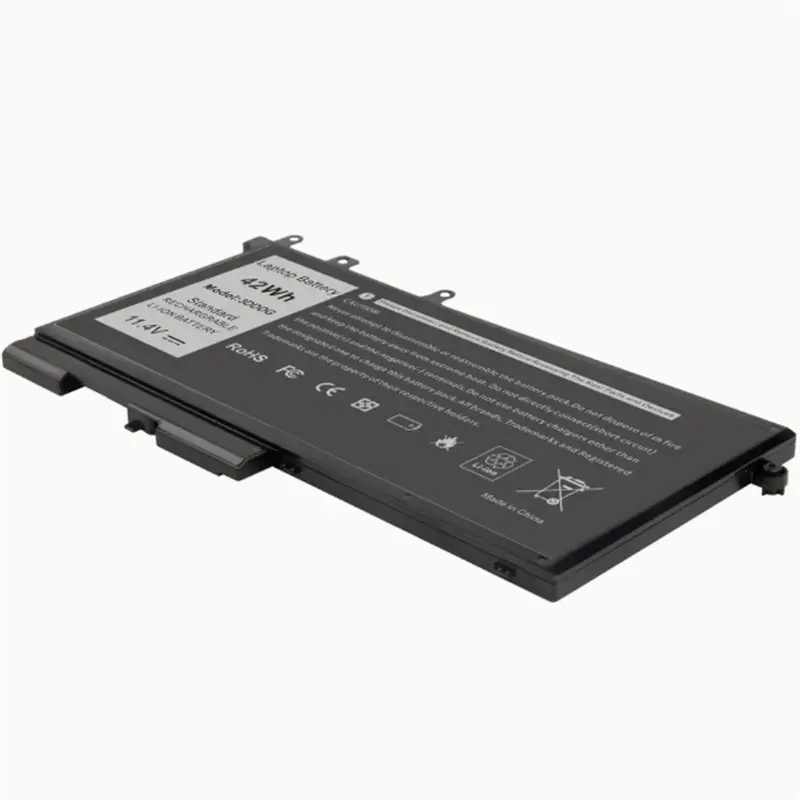
In the realm of customized laptop batteries, lithium-ion batteries with specifications of 11.4V 36Wh, 11.1V 62Wh, and 15.2V 49Wh have carved out distinct market segments for ultra-portable laptops, high-performance laptops, and commercial laptops, respectively, through their differentiated performance parameters. The following in-depth analysis examines five dimensions—electrical characteristics, application scenarios, customization solutions, quality control, and technological trends—to provide comprehensive technical reference for OEM/ODM collaborations.
Through differentiated combinations of voltage, capacity, and energy, these three batteries establish distinct product positioning with significant variations in cell configuration and fundamental performance:
Utilizes a 3S1P cell configuration (single cell voltage 3.8V), achieving an energy density of approximately 200Wh/kg with typical weight controlled between 220-250g. This specification achieves a 10% energy increase within the same volume by raising the single-cell voltage. Supports 1C-2C charge/discharge rates, reaches 70% capacity in 30 minutes, and offers a cycle life of approximately 1000 cycles.
Utilizing a 3S2P architecture (3.7V per cell), it achieves an energy density of 220Wh/kg with a weight of approximately 380-420g. Its dual-cell parallel design significantly enhances discharge stability, supports 2C fast charging (reaches 80% in 45 minutes), offers a cycle life of up to 1200 cycles, and delivers excellent low-temperature performance, maintaining over 85% capacity retention at -10°C.
Utilizes a 4S1P configuration (single cell voltage 3.8V), with an energy density of approximately 210Wh/kg and a weight of about 280-320g. The high-voltage design reduces discharge current losses. Combined with an intelligent BMS, it enables dynamic voltage regulation. It supports a charge/discharge rate of 1.5C (reaching 75% charge in 40 minutes) and has a cycle life of approximately 1100 cycles.
Cross-test data comparisons reveal distinct variations among the three batteries in endurance performance, safety characteristics, and environmental adaptability:
OEM/ODM customization for all three batteries requires close integration with end-product form factors and functional requirements to deliver tailored solutions:
| Specification | 11.4V 36Wh (3100mAh) | 11.1V 62Wh (5400mAh) | 15.2V 49Wh (3175mAh) |
|---|---|---|---|
| Voltage | 11.4V | 11.1V | 15.2V |
| Watt-hour (Wh) | 36Wh | 62Wh | 49Wh |
| Amp-hour (mAh) | 3100mAh | 5400mAh | 3175mAh |
Delivery information typically includes delivery times, shipping methods, packaging, etc., which may vary depending on the seller and the location of purchase.

OEM/ODM Laptop Batteries Rechargeable Lithium-ion Batteries documentation manual.
PDF DocumentThe 11.4V 36Wh battery uses a 3S1P (three cells in series) configuration with a single-cell voltage of 3.8V. The 11.1V 62Wh battery employs a 3S2P configuration (3.7V per cell) with cells arranged in parallel for enhanced discharge stability. The 15.2V 49Wh utilizes a 4S1P (four cells in series) configuration with 3.8V cells to reduce discharge current losses.
Based on a standard 5W power consumption test model, the 11.1V 62Wh battery delivers the longest runtime of approximately 11.5 hours. The 15.2V 49Wh battery provides around 8.8 hours, while the 11.4V 36Wh battery is optimized for light devices, yielding about 6.5 hours of runtime.
The 15.2V 49Wh battery specification utilizes specialized wide-temperature cells. This architecture guarantees reliable operation in challenging environments ranging from -20°C to 55°C, making it the preferred choice for industrial-grade notebooks.
The 11.4V 36Wh model is designed for 11-13 inch ultra-thin laptops and 2-in-1 tablets. The 11.1V 62Wh battery targets 14-15.6 inch high-performance laptops and graphics workstations. The 15.2V 49Wh battery is mostly utilized in 14-inch commercial, military-grade rugged laptops, and mobile medical terminals.
Customization options include cell parameters (adjusting capacity ±10%), custom interface connectors (like Type-C or DC circular pins), custom BMS functions (e.g., adding cell balancing mechanisms), and structural modifications through 3D modeling to accommodate slim (≤15mm) or elongated (≥200mm) battery compartments.
All three batteries include quadruple protection safeguards covering overcharge (4.35V/cell), over-discharge (2.75V/cell), overheat (60°C trigger), and short-circuit faults. Additionally, the 11.1V 62Wh battery incorporates a ceramic-coated separator and thickened aluminum-plastic film for enhanced needle penetration safety.