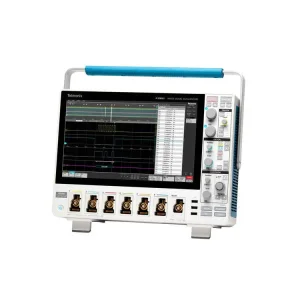
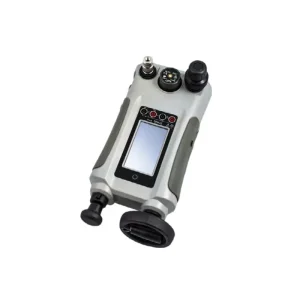
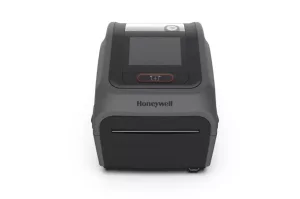
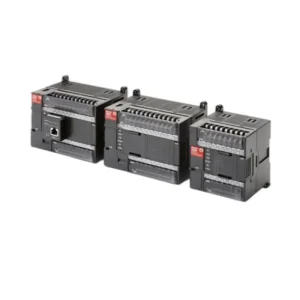
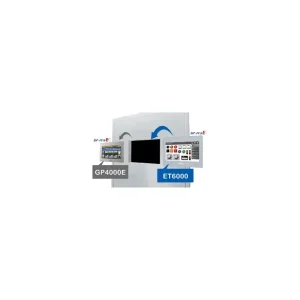
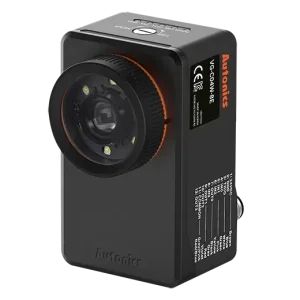
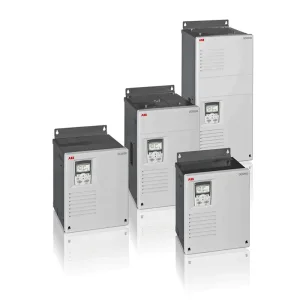
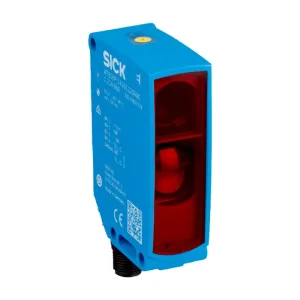
Optimized automation equipment, diagnostic components, and high-performance calibration devices exported by Machine-Win.
In modern electronic design, production, and verification workflows, the ability to supply precise, stable, and programmable electrical power is fundamental. Direct Current (DC) and Alternating Current (AC) programmable sources are not mere power utilities; they are high-precision testing instruments. As industries transition toward higher operating voltages, electric mobility, renewable energy grids, and high-frequency military communication networks, the requirements placed on AC and DC sources have advanced exponentially.
An AC Power Source is engineered to simulate diverse global utility grids. It delivers precise voltages, frequencies, and phases while maintaining low Total Harmonic Distortion (THD) and high stability against voltage transients. In contrast, a DC Power Source supplies ultra-clean, low-ripple continuous current, frequently acting as a solar array emulator, battery cell simulator, or clean reference rail for microelectronic components.
| Testing Parameter | Programmable AC Power Sources | Programmable DC Power Sources |
|---|---|---|
| Primary Function | Simulating grid conditions, single/three-phase line cycles, voltage drops, and harmonic distortions. | Simulating electrochemical battery profiles, photovoltaic curves, and high-precision DC rails. |
| Output Range Limits | Typically up to 300V / 600V AC RMS per phase; frequencies from 15Hz to 1200Hz. | Highly scalable up to 2000V+ DC, with fast slew rates and dual-quadrant operation. |
| Key Control Variables | Phase angle control, frequency sweeping, harmonic synthesis, inter-harmonics. | Constant Voltage (CV), Constant Current (CC), Constant Power (CP), internal resistance emulation. |
| Typical Applications | EV On-board Chargers (OBC), domestic appliances, aerospace avionics (400Hz/800Hz testing). | EV Powertrains, Solar Inverter MPPT tracking, semiconductor burn-in, battery pack cycling. |
Machine-Win Technology Co., Ltd. serves as an expert procurement and calibration integrator. By collaborating with elite equipment manufacturers (such as KEYSIGHT, TEKTRONIX, YOKOGAWA, ITECH, and RIGOL), we ensure global industries receive highly reliable power instrumentation engineered for complex electrical stress-testing requirements.
How programmable power sources act as the core testing foundation across key global industrial sectors.
Bidirectional programmable DC sources simulate EV battery behavior during charging and acceleration cycles. They allow testing engineers to evaluate motor controllers, battery management systems (BMS), and fast-charging piles without using actual volatile chemical batteries.
Equipped with built-in solar array simulation software, high-voltage DC sources replicate dynamic I-V curves under fluctuating environmental conditions. This verifies the MPPT efficiency of PV inverters under real-world weather patterns.
Commercial and military aircraft operate on 400Hz or variable 800Hz AC power grids. Programmable AC sources generate clean, high-frequency AC outputs to simulate generators and line dropouts, conforming to strict standards like MIL-STD-704 and DO-160.
Machine-Win Technology Co., Ltd. is a professional and reliable international supply chain company, specialized in providing a wide range of testing instruments and industrial control solutions. We maintain close partnerships with leading original manufacturers and official entities including KEYSIGHT, R&S, TEKTRONIX, KEITHLEY, RIGOL, NI, MEGGER, DRUCK, YOKOGAWA, and ITECH.
Our core services extend beyond product supply. We operate as a comprehensive technical ally, offering one-stop instrument sales, diagnostics, professional repair, and ISO-compliant calibration. Whether you require microvolt DC calibration or multi-kilowatt regenerative AC grid simulation, our engineering team ensures your instrumentation operates at certified accuracy.

The convergence of wide-bandgap semiconductors, regenerative grids, and intelligent automation systems.
By integrating Silicon Carbide (SiC) and Gallium Nitride (GaN) switching components, next-generation AC and DC sources achieve over 95% efficiency. This reduces physical footprint, increases switching speeds, and minimizes thermal dissipation.
Modern test systems prioritize energy recycling. Bidirectional sources absorb energy from devices under test (like discharging batteries) and return up to 90% of that energy to the local utility grid, lowering operating costs and supporting sustainability goals.
Standard APIs like LXI and SCPI, integrated with LabVIEW and Python drivers, enable modern power sources to link directly to automated testing systems (ATE). This allows remote telemetry, automated fault logging, and cloud-monitored reliability testing.
China has established a comprehensive manufacturing ecosystem for power electronics, with key hubs in the Yangtze River Delta and Pearl River Delta. These regions integrate raw semiconductor foundries, high-purity copper transformer winding facilities, high-speed SMT assembly plants, and certified EMC testing laboratories. This localized vertical integration enables rapid customization, stable production cycles, and high cost-efficiency.
As an international exporter, Machine-Win leverages this ecosystem to manage supply chain risks. We ensure that power supplies, electronic components, and measurement instrumentation undergo thorough inspection, strict quality checks, and CE/UL/RoHS compliance verification before shipment.
Genuine & Calibrated Products
Global Engineering Support
Industrial Brands Managed
Export Countries Serviced
Expert technical answers regarding programmable power sources, grid simulators, calibration standards, and system deployment.
Linear DC power sources deliver ultra-low noise, minimal ripple, and fast response times, making them suitable for sensitive analog circuitry and RF testing. However, they are larger and have lower efficiency (typically 30-50%). Switching power sources utilize high-frequency pulse-width modulation (PWM) to achieve efficiencies over 85%, offering higher power density and a compact design, though they introduce slightly more high-frequency noise.
A clean sinusoidal AC waveform is essential for testing compliance with standards like IEC 61000-3-2. High THD from a power source can introduce unwanted harmonics into the device under test (DUT), skewing standby power measurements and temperature calculations. Professional-grade programmable AC sources maintain a THD of less than 0.5% at full load.
In standard burn-in and lifetime endurance testing, power is dissipated as waste heat through resistive loads, requiring additional air conditioning. Bidirectional DC sources act as both source and sink, converting absorbed energy back to sync with the local AC grid. This can reduce total facility energy consumption by up to 90% in large-scale testing centers.
High-voltage DC presents severe electrical arc hazards. Ensure the system includes hardware-level Over-Voltage Protection (OVP), Over-Current Protection (OCP), safety interlocks, and emergency stop buttons. Proper grounding and galvanic isolation from the AC mains grid are required to protect operators and prevent ground loop interference.
To maintain trace accuracy and comply with ISO 9001 and ISO/IEC 17025 laboratory quality systems, a 12-month calibration interval is recommended. Regular calibration verifies the accuracy of internal voltage and current measurements against standards traceable to national metrology institutes.
Yes, many modern programmable sources support master-slave parallel configurations to increase current capability, or series configurations to increase output voltage. When setting up these systems, use dedicated share-bus cables and matched wire lengths to ensure balanced load sharing and prevent output oscillations.
Contact Machine-Win for technical consulting, custom OEM/ODM solutions, and direct supply of premium electrical and electronic test instruments.
Speak with our Technical EngineersHigh-performance safety controllers, pressure systems, and serial communication adapters provided by Machine-Win.
 Machine-Win