Machine-Win Technology Co., Ltd. is a globally established supply chain orchestrator and precision engineering support platform. We represent a reliable cross-border bridge for high-specification industrial instruments, electronic infrastructure, and universal power solutions. We serve as a comprehensive one-stop destination for test system integration, hardware distribution, calibration services, and certified ODM manufacturing.
By retaining robust direct-factory alliances with Tier-1 technological giants—including KEYSIGHT, ROHDE & SCHWARZ, TEKTRONIX, KEITHLEY, NI, MEGGER, DRUCK, YOKOGAWA, SIEMENS, SCHNEIDER, MITSUBISHI, and OMRON—we guarantee the provision of authentic, brand-new components alongside critical calibration tracking. Our service architecture is designed to reduce procurement complexity, accelerate time-to-market, and optimize supply-chain logistics for enterprise entities worldwide.
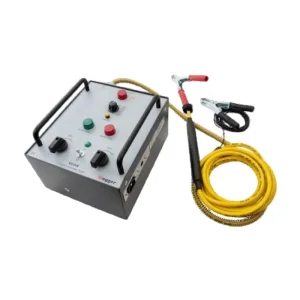
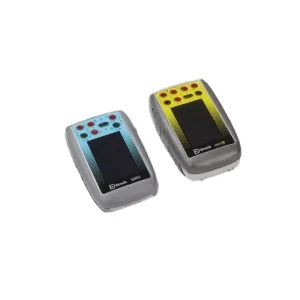
End-to-end management of complex instrumentation. We provide sales, repair, and certified calibration, maintaining strict traceability to international metrology standards.
High-efficiency, rugged power supply modules engineered for fluctuating input grids, ensuring clean DC outputs for sensitive instrumentation and automation networks.
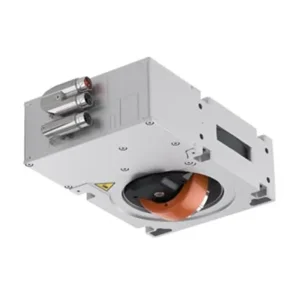
Comprehensive testing arrays, fiber optic analyzers, and spectrum analyzers from Rohde & Schwarz and Keysight to ensure communications integrity and data transmission quality.
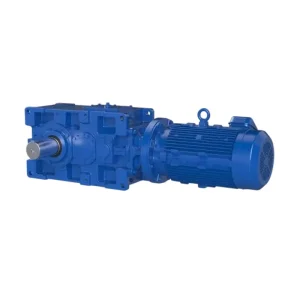
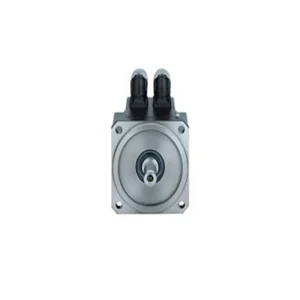
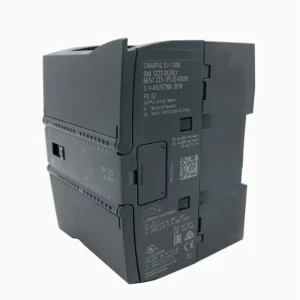
Strategic sourcing of PLC modules, servo systems, and circuit breakers from Siemens, Sumitomo, and Schneider. Providing reliable parts replacement for heavy machinery.
Custom-molded power components, adapters, industrial computing accessories, and POF shrink film packaging systems designed to specifications under robust quality controls.
Minimized operations downtime with active global sourcing networks. We provide urgent part locator services, customs clearances, and air-express freight routing.
An In-Depth Engineering Analysis of Universal Power Supplies, Global Compliance Protocols, and Supply Chain Efficiencies
In modern industrial manufacturing, telecommunications, and automated diagnostics, power reliability is a key operational metric. As grid infrastructures vary across geographic boundaries, the demand for highly reliable Universal Power Supplies (UPS) and programmable power conversion systems has risen. Global enterprises require power solutions that can accept wide input voltage ranges while maintaining high energy efficiency, low electromagnetic interference (EMI), and compliance with global safety standards.
The term "Universal Power Supplies" refers to power conversion units designed to operate across a broad range of input AC/DC voltages and frequencies without manual adjustment. Typical universal AC input configurations range from 85V AC to 264V AC, and 47Hz to 63Hz, allowing a single hardware unit to be deployed in North America (120V at 60Hz), Europe (230V at 50Hz), and Japan (100V at 50/60Hz). These systems utilize Active Power Factor Correction (PFC) stages to achieve power factors exceeding 0.95, reducing harmonic distortions on the supply grid and optimizing power utilization.
Active PFC employs high-frequency boost converters to shape the input current, aligning it with the mains voltage waveform. This design yields up to 99% power factor efficiency, whereas passive layouts generally top out at 75%. For large-scale data centers and manufacturing facilities, the transition to active universal power supplies translates to a measurable reduction in reactive power charges and simplified cabling layouts.
Selecting an industrial-grade universal power supply requires reviewing critical parameters to match system requirements. The table below represents the performance baseline for high-spec modular power setups distributed by Machine-Win Technology:
| Parameters & Features | Standard Requirements | Enterprise / Industrial Grade | Critical Application Impact |
|---|---|---|---|
| Input Voltage Range | 90 - 240 V AC | 85 - 305 V AC / 120 - 430 V DC | Mitigates brownouts & voltage surges in unstable grids |
| Power Factor (PFC) | >0.85 | >0.98 at Full Load | Minimizes harmonic current feedback, meets EN61000-3-2 |
| Mean Time Between Failures | <150k Hours | >500,000 Hours (MIL-HDBK-217F) | Reduces maintenance interventions and downtime costs |
| Isolation Voltage | 1,500 V AC | 4,000 V AC (Reinforced Insulation) | Protects downstream digital logic systems (PLCs, CPUs) |
| Operating Temperature | 0°C to 50°C | -40°C to +85°C (Derating above 60°C) | Permits reliable deployment in outdoor cabinets and hot plants |
The global sourcing of power electronics relies on China's manufacturing clusters. As a leading supplier of universal power units, China's supply chain offers distinct operational advantages:
Cross-border deployment of power supplies requires strict adherence to localized safety, environmental, and electromagnetic standards. A universal power supply cannot be deployed in a target market without appropriate regulatory markings. Key standards handled by Machine-Win include:
The safety standard for audio, video, information, and communication technology equipment. Mandatory for commercial deployments across North America and Europe.
Governs medical electrical equipment safety. Requires low leakage current profiles and two means of patient protection (2xMOPP) to guarantee patient safety.
Defines limits for conducted and radiated electromagnetic emissions. Ensures power supplies do not interfere with nearby communication networks.
Machine-Win Technology supports enterprise clients through localized compliance documentation, offering certified testing reports, factory-audit access, and design adaptations to meet local grid requirements. Our team coordinates with testing laboratories (such as TÜV SÜD, SGS, and UL) to ensure that custom OEM designs are certified prior to international shipment.
Universal power designs are deployed across diverse sectors, each presenting specific technical challenges:
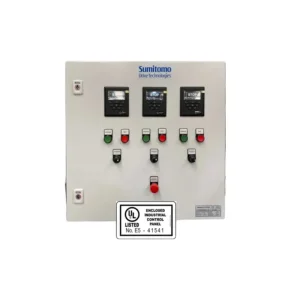
Industrial Automation and Controls: In control cabinets containing Siemens S7-1200 PLCs and Sumitomo drive controllers, power supplies must be DIN-rail mountable, handle high inductive transient loads, and offer parallel operation capability for power sharing and redundancy (N+1 configurations).
Telecommunications and Networks: Base stations and transmission centers require compact power profiles (1U/2U configurations) that can handle dual input sources (AC mains and DC backup batteries) with high efficiency (80 Plus Titanium levels) to minimize thermal loads in sealed enclosures.
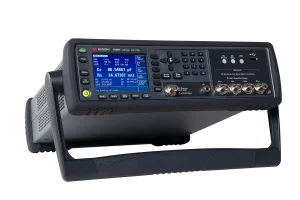
Test and Measurement Labs: Operating sensitive instruments, such as Keysight LCR meters or Rohde & Schwarz spectrum analyzers, requires power supplies with ultra-low output ripple and noise (typically <10mV peak-to-peak) to prevent signal interference during measurements.
A universal input power supply is engineered to automatically accept a wide range of input voltages (typically 85V to 264V AC) and frequencies (47Hz to 63Hz). This enables global enterprises to standardize on a single power supply model across all regional offices, reducing design complexity, inventory requirements, and procurement costs.
We source directly from licensed brand manufacturers, official distributors, and certified global supply channels. Every shipment is fully traceable, matches all manufacturer specifications, and is accompanied by original factory certificates and compliance markings.
Our OEM/ODM services cover custom physical dimensions (form factors), specialized wiring harness connectors, modified output rails (e.g., matching specific DC voltage profiles for PLCs or measurement gear), enhanced thermal heat sinks, and customized product labeling and packaging.
All calibration procedures for test instruments (such as Keysight, Tektronix, and Rohde & Schwarz) are performed in ISO-certified laboratories. Calibration certificates are traceable to national and international standard bodies (such as NIST or equivalent regional metrological organizations).
Standard off-the-shelf power supply configurations typically ship within 5-10 business days. Custom OEM/ODM designs requiring compliance updates or sheet metal alterations have lead times of 4 to 8 weeks, including prototyping and pilot production testing phases.
Each batch undergoes in-circuit testing, automated optical inspection, full-load burn-in at elevated temperatures, and final functional checks. This minimizes field failures and guarantees compliance with MTBF performance criteria.
 Machine-Win