High-performance diagnostic tools and system components engineered for critical industrial validation environments.
In modern industrial test bays, laboratory environments, and automated assembly systems, the deployment of highly stable electrical architectures is paramount. Custom AC-AC power supplies play an indispensable role in adjusting, conditioning, and stabilizing voltage levels, frequency envelopes, and wave profiles between conflicting grid standards. Whether matching the North American 60Hz grid standard with European 50Hz equipment, simulating avionics 400Hz environments, or mitigating harmonic distortion, bespoke AC-AC conversion hardware remains central to industrial productivity.
Machine-Win Technology Co., Ltd. stands as a professional, highly reliable international supply chain and engineering services company. We specialize in providing a wide range of advanced instruments, automation equipment, and power conversion configurations for global industries. With extensive experience and a globally integrated supplier network, we excel in delivering high-quality products, satisfactory customer services, and comprehensive integration support. Our commitment to excellence, technical reliability, and compliance makes us the preferred strategic partner for international engineering, testing, and production organizations.
Exploring the technical typologies used to transform AC power parameters for mission-critical electronic devices.
AC-AC power supplies convert an input AC waveform (defined by a set voltage, frequency, and phase configuration) into a distinct output AC waveform tailored to the target system. Unlike DC-DC buck or boost topologies, AC-AC conversion must preserve, adapt, or completely reconstruct the sinusoidal shape of the power wave. This is technically executed through two primary architectural paths:
Direct converters process the input voltage directly into an output waveform without an intermediate energy storage stage. These include:
This is the most common design pattern for custom variable voltage/frequency AC power supplies used in testing laboratories and commercial assembly lines. The double-conversion process runs as follows:
How variable-frequency AC power systems enable compliance, testing, and production across global zones.
AC-AC power supplies are not universal commodities; their configuration depends on the local grid infrastructure and target test protocols of specific industrial hubs. The following are primary application scenarios:
Commercial and military aircraft utilize a standard electrical bus frequency of 400Hz to minimize the weight of iron cores in magnetic components (such as transformers and motors). When testing avionics systems, ground crews and quality control centers require custom AC-AC power sources that accept local utility grid power (typically 50Hz/380V in Europe/China or 60Hz/480V in North America) and output a stable 115V AC / 400Hz three-phase supply. This allows diagnostic devices (such as high-speed spectrum analyzers and multimeters) to evaluate the components under flight-simulation conditions.
Manufacturing plants situated in 50Hz zones that manufacture consumer electronics or industrial machinery destined for 60Hz regions must perform end-of-line verification under local destination conditions. A custom AC-AC power supply allows engineers to simulate sag, swell, overvoltage, and brownout scenarios typical of destination grids, ensuring the product's internal power supply unit behaves reliably.
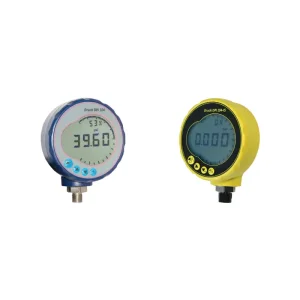
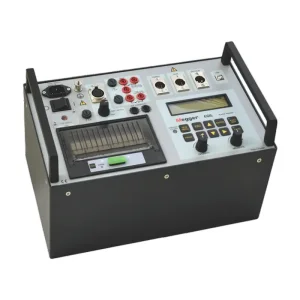
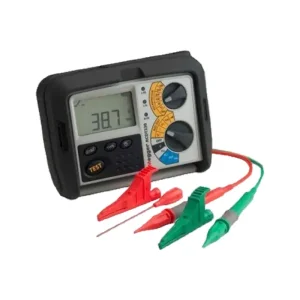
Testing labs utilize highly sensitive instruments—such as the Megger RCDT320/300 Residual Current Tester or the Druck DPI104 Pressure Gauge—which require stable, low-noise power references. Fluctuations in standard wall outlet power will introduce measurement noise, skewing calibration parameters. An isolated, double-conversion AC-AC regulator supplies clean power with negligible voltage deviation, providing the foundation for precise instrument calibration.
The convergence of wide-bandgap semiconductors, digital control loops, and bidirectional energy conversion.
The power supply sector is undergoing an engineering transition, moving away from slow-switching silicon-based components toward intelligent, high-density architectures.
Traditional AC-AC converters relied on silicon IGBTs limited to switching frequencies below 20 kHz due to thermal dissipation constraints. The implementation of Silicon Carbide (SiC) MOSFETs allows switching frequencies to exceed 100 kHz. This has a direct impact on the physical footprint of the supply: magnetic filter components (inductors and transformers) can shrink in size, and conversion efficiency is boosted up to 98.5%, reducing cooling requirements.
Modern custom power supplies utilize high-speed Digital Signal Processors (DSPs) to run real-time feedback loops. Instead of relying on analog op-amps, digital controls calculate the correct switching pattern at microsecond intervals. This digital configuration enables features such as:
For applications such as testing motor drives and electric vehicle chargers, energy must flow back into the grid. Regenerative AC-AC converters function as both sources and sinks. When the unit under test generates back-EMF, the converter feeds this energy back to the local utility grid with minimal losses, rather than dissipating it as heat through heavy resistor banks.
How Machine-Win Technology Co., Ltd. bridges high-performance hardware distribution with custom OEM/ODM solutions.
Our sales, repair, and calibration services encompass top-tier brands including KEYSIGHT, R&S, TEKTRONIX, KEITHLEY, RIGOL, NI, MEGGER, DRUCK, YOKOGAWA, and ITECH. We cover a broad inventory of cable testers, network analyzers, thermal imagers, oscilloscopes, and process calibrators.
We supply brand-new, original industrial electronics, electrical components, machinery spare parts, hardware, tools, and industrial raw materials. Featured partner brands include MITSUBISHI, SIEMENS, SCHNEIDER, PANASONIC, OMRON, DELTA, WEINTEK, EMERSON, EATON, and PHOENIX CONTACT.
We deliver specialized OEM/ODM solutions across multiple sectors, including computing accessories (industrial battery packs, custom adapters, chargers, peripherals), POF shrink packaging materials, and custom automated workshop production line components.
Every transaction is backed by technical validation and pre-delivery inspection. We guarantee authentic hardware, precise engineering integration, transparent communication, and reliable logistics execution on a global scale.
Capitalizing on localized engineering ecosystems, vertical integration, and rapid prototype execution.
The global dominance of China's power electronics supply chain is not simply a product of labor scaling; it is built on a dense network of suppliers, raw material access, and rapid engineering iteration. When sourcing custom AC-AC power supplies, this ecosystem offers distinct structural benefits:
China is home to the world's most concentrated cluster of copper winding factories, magnetic core manufacturers (ferrites and nanocrystalline alloys), and sheet metal fabricators. This proximity allows engineering designs to move from CAD models to physical prototypes in days rather than weeks. Custom enclosure designs, non-standard transformer wound-cores, and tailored heat sinks are developed in parallel, reducing overall time-to-market.
With massive investments in local semiconductor foundries and packaging plants, domestic China-based manufacturers have established complete control over the assembly process of IGBT modules, driver boards, and microcontroller units. This limits vulnerability to global supply chain disruptions and ensures a steady source of basic components.
By leveraging Machine-Win Technology’s strategic position in the domestic industrial market, global buyers can navigate this vast manufacturing base with assurance. We perform factory qualification, audit production processes to ensure quality standards, inspect raw materials, and oversee compliance testing. This eliminates the communication gaps and risk factors historically associated with cross-border procurement.
Analyzing current global market factors driving the need for smart, flexible AC energy systems.
The global demand for custom AC-AC power conversion and test equipment is expanding, driven by structural shifts in the energy and industrial sectors:
Ensuring hardware reliability, operator safety, and electromagnetic compatibility across international markets.
Industrial power supplies operate at dangerous current levels and must adhere to strict safety certifications. Sourcing custom hardware requires verifying conformity to the following protocols:
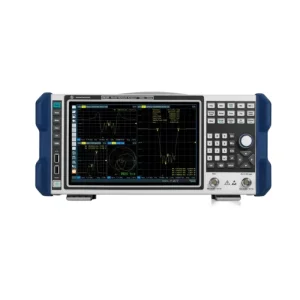
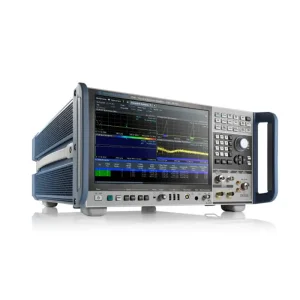
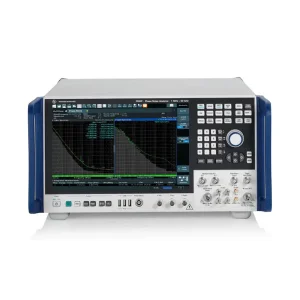
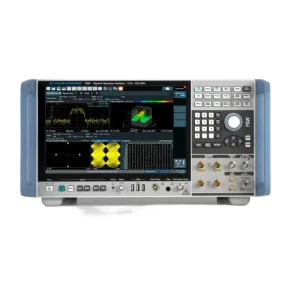
High-frequency switching topologies naturally emit radio-frequency interference (RFI). Power supplies must conform to FCC Part 15 (North America) and the EMC Directive 2014/30/EU (Europe). Compliance is verified using advanced signal analyzers, such as the Rohde & Schwarz FSW26 Spectrum Analyzer, which detects radiated emissions across wide bandwidths to prevent interference with nearby telecommunication equipment.
AC-AC converters must carry approvals such as UL 61010-1 (safety requirements for electrical equipment for measurement, control, and laboratory use) or EN 62368-1. Systems are evaluated under isolation conditions, verifying that insulation barriers prevent leakage current to chassis grounds, protecting human operators from electric shock.
Industrial test labs must maintain measurement traceability. Equipment distributed by Machine-Win is calibrated in alignment with national metrology institutes (such as NIST or CNAS), utilizing precision calibrators and pressure standards like the Druck DPI104 to guarantee out-of-the-box accuracy.
Integrating equipment distribution, engineering support, and logistical execution into one seamless service.
We provide a comprehensive range of premium testing instruments, including solutions from KEYSIGHT, Rohde & Schwarz, Megger, and more, ensuring you source genuine products with full support.
Our professional network testing solutions help analyze performance, diagnose connectivity issues, and optimize high-speed networks for stable, efficient operations.
Our experienced, responsible engineering and customer-service team is equipped to support technical evaluations, retrofitting, and customized power configurations.
We deliver brand-new, original industrial spares across electrical, automation, control, and mechanical assemblies, keeping your manufacturing lines running without downtime.
Leveraging our deep trade networks, we identify reliable, cost-effective manufacturers, streamline your supply chain, negotiate specifications, and improve acquisition efficiency.
Our support lines are open 24 hours a day, 7 days a week, to handle urgent requirements, fast component sourcing, and international shipping logistics.
Answers to common engineering queries regarding AC-AC power systems, device calibration, and supply chain logistics.
Static converters utilize solid-state electronics (rectifiers, DC links, and inverter circuits using IGBTs or MOSFETs) to synthesize the output waveform. They have no moving parts, operate quietly, provide fast response times (<100µs), and offer high frequency resolution. Rotary converters, on the other hand, couple an electric motor physically to a generator. While bulky and requiring mechanical maintenance, rotary units handle massive overload surges and provide natural galvanic isolation, making them suitable for heavy-duty industrial start-up currents.
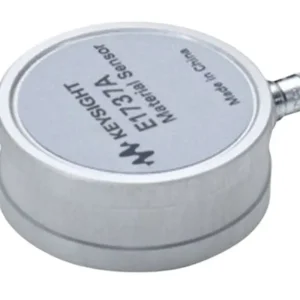
High THD introduces unwanted high-frequency currents into electrical systems, which generate heat in transformer windings and introduce noise in analog components. When testing precision measurement systems like the Keysight material temperature sensors or R&S analyzers, input power harmonics can corrupt analog measurement loops, leading to false calibration steps or inaccurate diagnostic outputs.
Active PFC forces the input current to trace the input voltage wave, keeping the system power factor close to 0.99. This limits reactive power losses, minimizes harmonic feedback from the converter back onto the factory floor grid, and prevents local circuit breakers from tripping under peak load currents.
Yes, modern DSP-controlled power sources can generate arbitrary waveforms. They can be programmed to simulate voltage sags, phase loss, micro-interruptions, and specific phase-angle spikes to verify that industrial control systems (like Siemens PLC loops or Pro-face Gateways) can ride through grid disturbances without crashing.
Industrial automation controllers, precision analyzers, and hardware essential for high-frequency infrastructure.
 Machine-Win