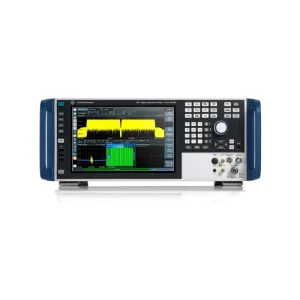
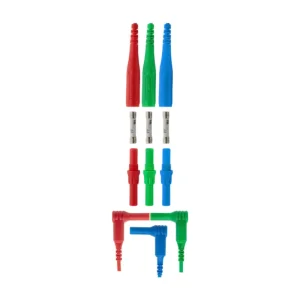
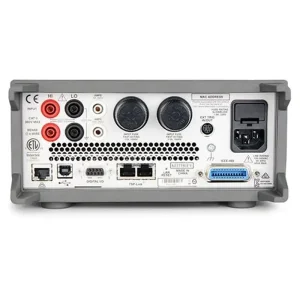
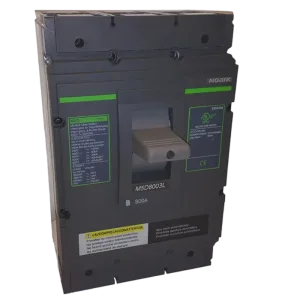
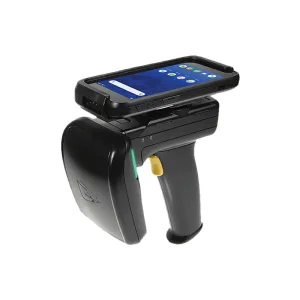
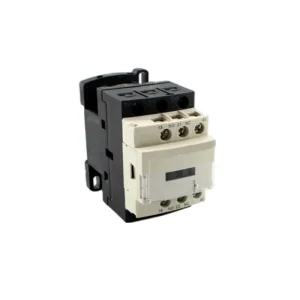
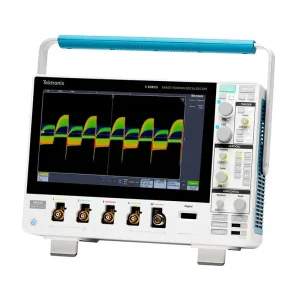
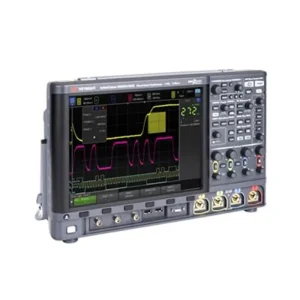
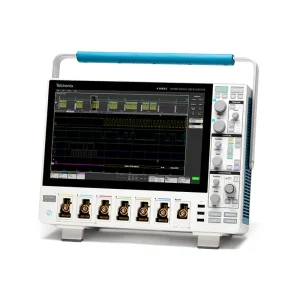
Top-tier testing devices, calibrators, and industrial control processors curated from the world's leading metrology networks.
Machine-Win Technology Co., Ltd. is a highly professional, reliable international supply chain enterprise specializing in providing high-precision metrology, electrical testing, and customized hardware components for global industrial infrastructures. With extensive industry expertise and a resilient network of global tier-1 manufacturers, we excel at bridging precision manufacturing with strict regulatory and engineering frameworks.
We offer our clients premium instruments, calibration setups, OEM/ODM production configurations, and customized systems designed to ensure seamless operational continuity in power generation, telecommunications, and industrial automation.
Contact Our Technical Team
We deliver one-stop instrument solutions, including precision sales, expert repairs, multi-brand calibration, and comprehensive OEM/ODM engineering partnerships for advanced industrial equipment.
Enjoy hassle-free end-to-end support, 100% guaranteed genuine products, verified technical solutions, on-time deliveries, and transparent supply communications to maximize operational ROI.
Backed by decades of global trade expertise and solid technical services, we adhere to integrity-driven partnerships that convert procurement complexities into seamless logistical success.
Understanding the core dynamics of energy verification, harmonic compliance, and reference standards.
Electric meter testers serve as the foundation of billing integrity and grid stability. In an era dominated by distributed energy resources (DERs), microgrids, and electric vehicle (EV) charging infrastructures, electric meter testers must perform far beyond basic accuracy checks. Modern energy meters register multidirectional power flows, high-order harmonics, and complex power factors, making advanced evaluation instruments vital.
To maintain compliance with standards like ANSI C12.20 and IEC 62053, testing devices must measure parameters with a precision tolerance as low as ±0.01% or ±0.02%. This absolute accuracy relies on advanced metrological baselines, digital signal processors (DSPs), and highly stable reference standards. The core functionality of an electric meter tester spans three primary testing planes:
Evaluating the error drift of utility energy meters against an onboard, traceable standard (such as an internal temperature-compensated standard or external rubidium clock reference) to ensure billing equity.
Calibrating current transformers (CTs) and voltage transformers (VTs) by analyzing phase angle deviations, ratio errors, and burden measurements under actual operational loads.
Detecting, capturing, and analyzing voltage sags, swells, transients, and Total Harmonic Distortion (THD) up to the 50th or 100th order that degrade grid assets.
How digitalization, automated calibration, and AI-driven grid optimization are reshaping electric testing tools.
Traditional, manual field testing of electric meters is quickly giving way to interconnected, automated cloud verification networks. The integration of IoT connectivity within handheld and rackmount meter testers allows field data to sync immediately with centralized asset management systems. This reduces human error, provides immediate digital certificates, and allows utilities to track the degradation of accuracy over time using predictive algorithms.
Future metrology devices will utilize quantum-level references (such as Josephson Junction arrays scaled to portable form factors) and highly stable fiber-optic oscillators. Additionally, the rise of wide-bandgap (SiC and GaN) semiconductor switching devices in industrial settings introduces high-frequency noise that requires testing equipment to support bandwidths reaching into the hundreds of kilohertz (kHz).
Tailored metrological systems designed for heavy industry, utilities, and testing labs.
Ensures substation power quality compliance, manages distribution transformer loads, and helps resolve customer billing disputes. Features portable, field-hardened standards for field technicians.
Protects sensitive manufacturing setups and high-density computing clusters from voltage drops and harmonic disturbances. Maximizes energy efficiency by monitoring load distributions.
Delivers high-precision benchtop reference standards, automated software platforms, and calibration reports that comply with international ISO 17025 laboratory standards.
How automated manufacturing and highly integrated local supply ecosystems optimize quality and shorten lead times.
Modern Chinese manufacturing facilities utilize Industry 4.0 principles, blending automated robotic assembly lines with real-time quality control checks. In the production of electric meter testers and diagnostic gear, this ensures highly repeatable assembly tolerances and consistent calibration performance across massive production runs.
Our partner factories utilize automated Surface Mount Technology (SMT) for mainboards and environmental testing chambers that simulate extreme operating conditions (from -40°C to +85°C). By sourcing through our established network, you leverage:
Meeting strict international regulatory standards and providing global engineering support.
Electrical testing instruments must meet strict safety and metrological standards to be legally deployed in different regions. Compliance with European CE directives, North American UL listings, and localized requirements (like MID in Europe or state-specific utility regulations in the US) is essential. Our supply network ensures that all calibration systems comply with:
| Standard | Applicability | Key Parameters Verified | Compliance Checkpoint |
|---|---|---|---|
| IEC 62053-21/22 | International Electric Meters | Class 0.5S and 0.2S active energy meter accuracy checks under varying temperatures. | Harmonic immunity and electromagnetic compatibility (EMC). |
| ANSI C12.20 | North American Grid Infrastructure | Establishes testing standards for electricity meters with accuracy ratings of 0.2 and 0.5. | Phase shift tolerances and start/load current performance verification. |
| ISO/IEC 17025 | Global Calibration Laboratories | Accredited metrological traceability to NIST, NPL, or NIM reference systems. | Uncertainty budget calculations and testing repeatability. |
| CE / UL Markings | European / American Safety Directives | Ensures high-voltage insulation safety and operator protection. | Creepage distances, dielectric strength, and impulse voltage tests. |
To ensure long-term reliability and compliance, we work with localized calibration centers to offer regional recertification, repair services, and replacement components. This local network helps minimize instrument downtime and ensures that equipment remains within specification.
A guide for purchasing departments: Key criteria for evaluating equipment suppliers and products.
Ensure the equipment matches the voltages, current ranges, and utility meter classes used in your region (e.g., compatibility with CT/PT secondary outputs, support for Rogowski coils, or direct connection capacity up to 480V/800A).
Evaluate more than the initial purchase price. Calculate costs for annual calibration, software updates, replacement test leads, and technical training. Sourcing components through unified providers like Machine-Win can reduce TCO.
Verify that the system's software can export data in formats like CSV, XML, or PDF, and offers API support to link test results directly with your ERP, SCADA, or laboratory information system (LIMS).
Work with partners that offer reliable product availability, cross-brand support, and verified supply chain logistics. This reduces shipping delays and shields you from geopolitical or logistics risks.
Integrating machinery, high-precision equipment, and components into a streamlined service to help you scale.
Direct access to leading calibration brands like Keysight, Rohde & Schwarz, and Megger, ensuring guaranteed equipment authenticity.
Comprehensive systems designed to test network performance, diagnose fiber issues, and maintain data flow stability.
Experienced engineers and customer support agents ready to help configure, troubleshoot, and calibrate your systems.
Original spare parts and hardware components from leading brands like Siemens, Omron, Mitsubishi, and Yaskawa.
Optimized global procurement networks that reduce lead times, improve sourcing efficiency, and lower costs.
Fast turnarounds, clear communication, and dedicated logistics to handle urgent component requirements.
Expert technical answers to common queries regarding electric meter testers, calibration, and sourcing.
Class 0.2S and Class 0.5S refer to the accuracy standards defined by the IEC. A Class 0.2S meter has a maximum measurement error limit of ±0.2% under reference conditions, even down to very light loads (e.g., 5% of nominal current). A Class 0.5S meter allows for a ±0.5% error margin. Naturally, testing equipment must be at least 4 to 10 times more accurate than the meter under test, requiring reference standards with accuracy classes of 0.05% or 0.02% to reliably verify Class 0.2S meters.
In AC power systems, power is calculated as P = V * I * cos(θ), where θ is the phase angle difference between voltage and current. If a Current Transformer (CT) introduces even a tiny phase shift (phase angle error), the calculated active power will drift significantly, particularly under low power factor conditions. Therefore, advanced tester units evaluate phase shift with arcminute or micro-radian resolution to ensure accurate calculation of billing parameters.
Non-linear loads like industrial variable speed drives, LED driver circuits, and EV charging stations generate high-frequency current harmonics. Standard induction meters cannot measure these currents accurately, and older digital meters can experience tracking errors. Modern testing setups simulate up to 50th or 100th harmonic conditions to ensure that revenue-grade smart meters measure actual energy usage correctly, even under high Total Harmonic Distortion (THD) loads.
By utilizing a unified supplier like Machine-Win Technology, buyers avoid the hassle of managing multiple vendor relations. We handle procurement, check product authenticity, coordinate calibrated testing, and manage logistics across top brands (like Keysight, Tektronix, Megger, Siemens, and OMRON). Additionally, we provide custom OEM/ODM services, ensuring you receive optimized rates, shorter lead times, and reliable technical support.
Traceability is maintained through calibration chains that lead back to national standards bodies like NIST (USA), NIM (China), or PTB (Germany). Every testing instrument shipped by Machine-Win is calibrated using standard procedures and can be supplied with traceable certificates. This ensures compliance under ISO/IEC 17025 rules and guarantees that the measurement results will be accepted by international regulatory authorities.
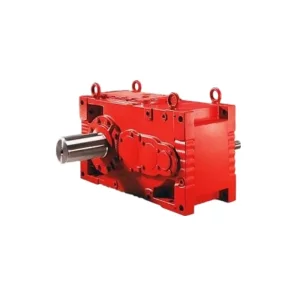
A collection of industrial-grade signal controllers, gear reducers, signal analyzers, and hardware components.
 Machine-Win