In recent years, the demand for Benchtop Oscilloscopes has surged dramatically. These versatile tools are essential in various technical fields. Experts like Dr. Emily Carter, a leading engineer in signal analysis, emphasizes, "The right oscilloscope can transform your understanding of circuit behavior." Her insights underscore the importance of selecting the best models available.
As we look ahead to 2026, buyers face a crowded market filled with options. New technology and innovative designs present both opportunities and challenges. Many brands are competing to outperform each other, claiming superior features and capabilities. However, not all models meet expectations. Evaluating specifications and real-world performance is crucial.
Navigating this landscape requires expert knowledge. Users must balance cost, functionality, and reliability. The best Benchtop Oscilloscopes should offer more than just flashy features; they should deliver consistent results. As buyers consider their options, informed decisions will lead to better investments in technology.
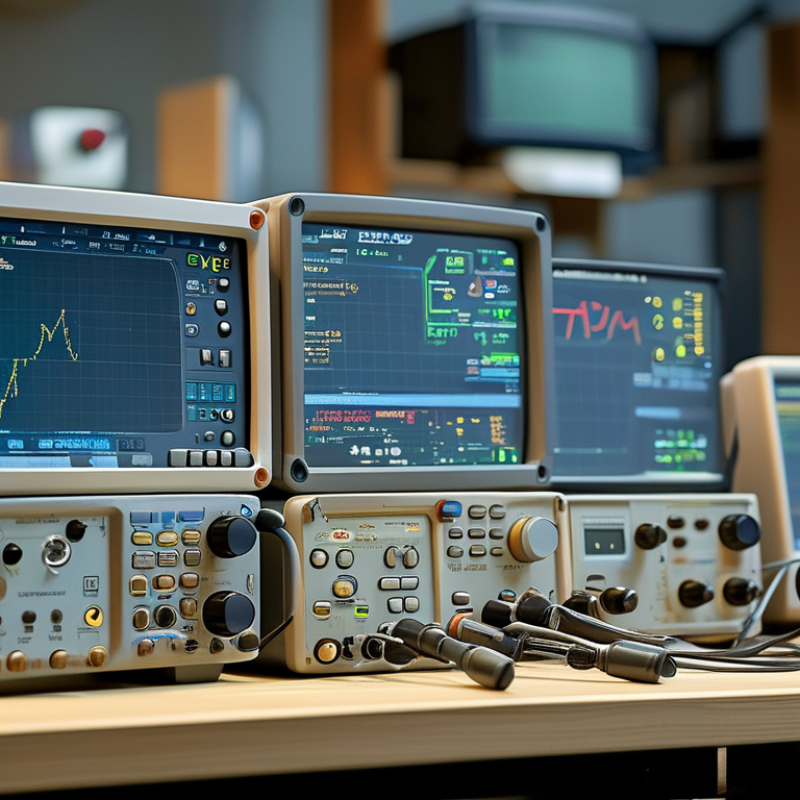
In 2026, benchtop oscilloscopes will continue to evolve, greatly impacting electronic testing. According to recent industry reports, the global market is projected to grow at a compound annual growth rate (CAGR) of around 6%. This growth highlights the increasing importance of accurate waveform analysis in various applications, such as automotive and telecommunications. Failures in high-speed design may arise without proper testing tools.
Additionally, oscilloscopes in 2026 will reflect significant advancements in technology. Higher bandwidths and improved sampling rates are expected. Reports indicate that oscilloscopes with 1GHz bandwidth will become more common in labs. However, accessibility remains an issue. Many labs struggle with budget constraints, limiting their ability to invest in high-end models.
The usability of benchtop oscilloscopes is another area for reflection. User interfaces may become more sophisticated, yet more complex specifications can overwhelm new users. Simplicity and functionality must coexist for effective use. Balancing advanced features with usability will be critical for manufacturers in 2026. Comprehensive training will also be essential. Without it, users cannot fully leverage these advanced oscilloscopes.
The chart above shows a comparison of various specifications for the top benchtop oscilloscopes expected in 2026. Key attributes such as bandwidth, sample rate, number of channels, memory depth, and price are analyzed across five different models.
When selecting benchtop oscilloscopes, several key features stand out.
Bandwidth is crucial; it determines the range of frequencies the device can accurately measure.
For most applications, a bandwidth of at least 100 MHz is advisable.
If you work on high-speed signals, consider oscilloscopes with higher bandwidth to capture critical details.
Sample rate also plays a vital role. It should ideally be at least four times the bandwidth.
This allows for accurate representation of waveforms. Look for oscilloscopes that offer a good balance between bandwidth and sample rate for effective performance.
Tips: Always assess the number of channels required for your tasks.
More channels can simplify the process when measuring multiple signals.
Also, consider the storage depth. A greater storage depth provides longer waveform captures without losing details.
Another factor is the user interface. An intuitive interface can save time and reduce frustration.
Features such as touch screens and customizable setups enhance usability. However, be wary of overly complex features that can hinder rather than help.
Lastly, think about the portability if you work in multiple locations.
Compact and lightweight models may be beneficial. Yet, ensure they still offer the features you need.
Finding a balance between portability and functionality is essential for a productive workspace.
When selecting a benchtop oscilloscope, consider various applications and specific needs. Many features can significantly impact performance. For instance, bandwidth and sample rate are crucial for accurate signal analysis. A model with a bandwidth of 100 MHz may suffice for basic tasks, but higher frequencies require more advanced options. Ensure the sample rate matches your expected input signal for reliable measurements.
User interface usability also plays a role in the oscilloscope's effectiveness. Touchscreen controls can simplify navigation, while traditional button layouts might provide tactile feedback. Look for models with clear displays. Image resolution and screen size affect visibility and ease of use. Some oscilloscopes provide better visibility in bright conditions, which is valuable in lab settings.
Integration with software tools is another critical aspect. Some devices offer PC connectivity for data analysis and visualization. This can enhance the oscilloscope's value. However, not all models support seamless software interaction. Reflecting on these factors can help users identify the best fit for their needs. Balancing features with budget constraints often leads to trade-offs that require thoughtful consideration.
When evaluating benchtop oscilloscopes for global buyers in 2026, pricing and performance remain key factors. Buyers often report discrepancies in features across different models. The performance can vary significantly based on specific application needs. Some oscilloscopes excel in bandwidth, while others may focus on sample rates or storage depth. Understanding these metrics is crucial for making an informed decision.
Pricing strategies can be complex. Many oscilloscopes come with a range of configurations that influence cost. Some users find themselves paying extra for features they do not fully utilize. In contrast, affordable options might compromise essential functions, leading to underwhelming performance. Reflecting on these aspects is essential. Assessing individual requirements can help buyers avoid overspending while ensuring they are not left wanting critical capabilities.
A thorough comparative analysis reveals trends in the market. Users may notice that certain models offer better long-term reliability. Yet, the cheap options may appeal in the short term. Many buyers express frustration over hidden costs in accessories or licenses. This inconsistency highlights the importance of researching user reviews and specifications. In the end, there is no one-size-fits-all solution. Each buyer's unique needs will dictate the best choice for their projects.
In the ever-evolving field of electronics, benchtop oscilloscopes are becoming increasingly sophisticated. In 2026, we anticipate significant advancements in features such as bandwidth and sampling rates. These improvements will enhance accuracy in signal capturing and analysis. Future models may incorporate advanced digital signal processing capabilities as well. This advancement will allow engineers to interpret complex waveforms more efficiently.
Tips: When choosing an oscilloscope, consider the specific applications you will use it for. Think about how often you will need portability versus fixed-location use.
Another notable trend is the integration of artificial intelligence. AI can smarten the analysis of waveforms, providing insights that manual methods often miss. This shift towards smart diagnostics will not only save time but also minimize the chances of human error.
Tips: A well-structured learning plan is essential for mastering new technologies. Engaging in online communities can expand your understanding of oscilloscope features.
As technology progresses, the portability of oscilloscopes will improve. Future designs may be lighter and more compact, making them user-friendly for various environments. Users should remain cautious about choosing features that align with their actual needs. It’s easy to be swayed by fancy specifications that may not be necessary. Reflecting on past purchases can help guide future decisions.
: Look at bandwidth, sample rate, and specific applications. These factors greatly affect performance.
Bandwidth determines the range of frequencies the oscilloscope can accurately measure. Higher frequencies need better models.
A match between the sample rate and input signal ensures reliable measurements. Mismatched rates can lead to inaccuracies.
An intuitive user interface simplifies operations. Touchscreen controls may enhance navigation compared to traditional buttons.
PC connectivity allows for better data analysis. However, not all models support seamless software interaction.
Not necessarily. Some expensive models offer features you might not use. Understand your needs to avoid overspending.
Research all potential extra costs, including accessories. User reviews often highlight these issues.
A clear display improves visibility. This feature is especially important in bright lab settings.
Assess critical features based on your needs. Consider trade-offs to ensure you get essential functions at a reasonable price.
Buyers may discover unexpected limitations or costs after purchase. Reflecting on these experiences can help in future decisions.
In 2026, benchtop oscilloscopes are expected to play a crucial role in various engineering and research applications, offering enhanced capabilities and precision. When choosing the right benchtop oscilloscope, users should consider key features such as bandwidth, sample rate, and user interface, which significantly impact performance and usability.
The top 10 benchtop oscilloscopes feature a diverse range of models suitable for different applications, from basic waveform analysis to complex signal diagnostics. A comparative analysis of pricing and performance illustrates the value proposition of each model, guiding buyers in making informed decisions. Furthermore, future trends in benchtop oscilloscope technology indicate advancements in digital processing and connectivity options, paving the way for more sophisticated measurement tools.

Machine-Win