In the rapidly evolving field of electronics, "Oscilloscopes And Probes" play a critical role in testing and diagnosing circuits. As we approach 2026, understanding the key players and the latest technologies in this industry is essential. Dr. Alice Chen, a leading expert in electronic measurement, once stated, "The right oscilloscope can transform your design process." This highlights the significance of choosing quality equipment.
The demand for high-performance oscilloscopes is rising. Industries such as telecommunications and automotive rely heavily on precise measurements. Buyers face numerous options in oscilloscopes and probes. Manufacturers now offer advanced features like enhanced bandwidth and high sample rates. Yet, some users struggle with understanding these specifications. Picking the right tools can be daunting.
Quality matters in "Oscilloscopes And Probes." Not all brands meet the high standards needed for professional use. Often, buyers overlook post-purchase support and warranty options. As you navigate this guide, reflect on your specific needs. Consider what features will truly benefit your work. Balancing cost with quality is essential, and not an easy task.
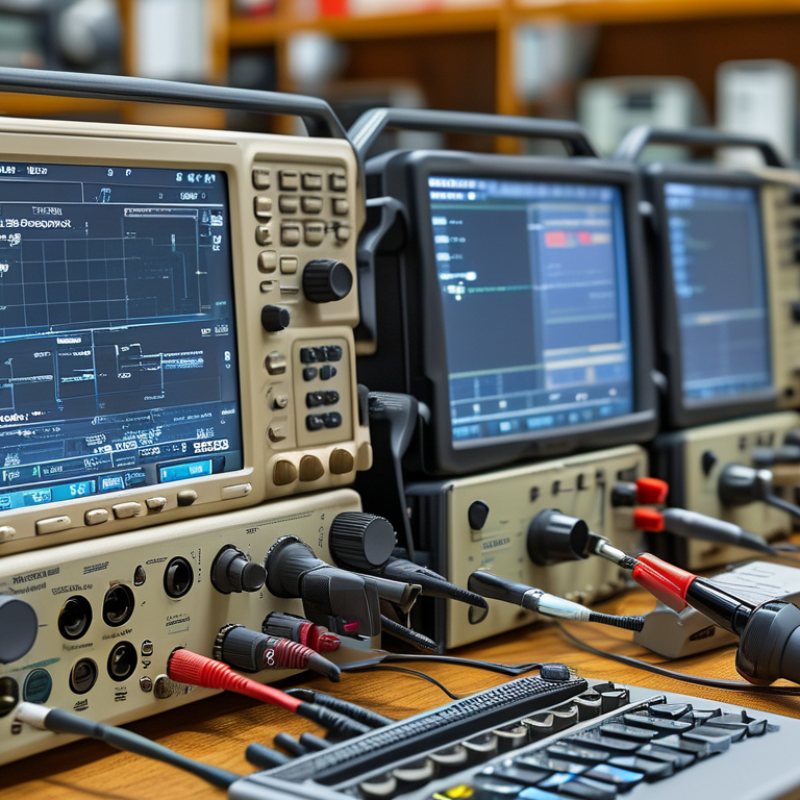
Overview of Oscilloscope and Probe Technology in China
Oscilloscope and probe technology in China is rapidly evolving. These tools are crucial for engineers and technicians to analyze electronic signals. A better understanding of this technology can enhance product development and testing efficiency.
Modern oscilloscopes in China offer advanced features. High sampling rates and increased bandwidth are common. This technology allows for detailed signal capture. Probes vary in types, with active and passive models available. Each type has its unique applications in different scenarios.
Despite improvements, challenges remain. Proper calibration is often overlooked, leading to inaccurate measurements. Users need to regularly assess their equipment. Training and knowledge sharing can mitigate common issues. This emphasis on continuous learning is vital for maintaining reliability and accuracy in measurements.
Key Features to Consider When Buying Oscilloscopes
When purchasing oscilloscopes, it's crucial to focus on key features that influence performance. Bandwidth is a primary consideration. A higher bandwidth enables accurate capture of high-frequency signals. For many applications, a bandwidth of at least 100 MHz is recommended. According to industry reports, 47% of users faced challenges with bandwidth limitations in their previous instruments. Potential buyers should evaluate their specific requirements.
Sample rate is another factor to assess. It determines how frequently the oscilloscope samples the signal. A minimum sample rate of five times the bandwidth is advisable. For instance, if the bandwidth is 100 MHz, the sample rate should reach at least 500 MS/s. Yet, many oscilloscopes fall short, capturing less than optimal data. This can result in inaccurate findings.
Memory depth plays a significant role. It affects how much waveform data can be stored for analysis. Oscilloscopes with deep memory allow longer signal captures. A memory depth of 10 Mpts is a useful baseline, providing more detail without sacrificing performance. Awareness of these details can lead to better decision-making when buying oscilloscopes.
Top Oscilloscope Brands and Their Market Shares in 2026
In 2026, the landscape of oscilloscopes and probes will be shaped by several prominent brands. Understanding their market shares is essential for buyers. Each brand offers unique features and capabilities, influencing their popularity in the industry. Some focus on high bandwidth and user-friendly interfaces, while others excel in portability and affordability.
Tips: When selecting an oscilloscope, consider your specific application. For educational purposes, versatile and easy-to-use models are ideal. On the other hand, advanced users may seek features like deep memory and high sample rates. Exploring various brands will provide insight into their strengths and weaknesses.
Market dynamics are ever-changing. Developing new technologies can shift brand dominance rapidly. Buyers should stay informed about trends and advancements. Look for brands that prioritize customer feedback. Assessing the support they provide, such as software updates and technical assistance, can reveal their commitment to quality.
Tips: Make a list of your requirements before making a purchase. Compare different models based on reviews and user experiences. Visiting forums can help gather real-world insights into performance and reliability.
Popular Probes for Oscilloscope Applications: A Comprehensive Guide
When choosing probes for oscilloscopes, several factors come into play. Probes are crucial for accurate measurements. They bridge the gap between the oscilloscope and the circuit. A poor-quality probe can distort the signal. This can lead to incorrect readings and wasted time.
Common types include passive, active, and differential probes. Passive probes are versatile and widely used. They are great for general applications. Active probes offer higher bandwidth. They are vital for high-speed signals. Differential probes are essential for measuring voltages between two points. They help in complex circuit analysis.
Selecting the right probe enhances your measurement quality. It's also important to consider the bandwidth and input impedance. Compromising on these aspects can lead to measurement errors. Many users overlook these factors. But they significantly impact results. The ideal probe depends on your specific applications and needs. Careful selection ensures reliable and accurate data.
Popular Probes for Oscilloscope Applications (2026)
This chart illustrates the popularity of various types of probes used in oscilloscope applications. The data represents the estimated usage percentage of each probe type among users.
Future Trends in Oscilloscope and Probe Technologies in China
The future of oscilloscopes and probes in China is evolving rapidly. Experts foresee advancements in digital signal processing and enhanced bandwidth capabilities. These improvements will significantly improve measurement accuracy, a crucial need in modern testing environments.
Innovations in form factors are also expected. More ergonomic designs will allow for better user interaction, providing a seamless experience for engineers. As technology advances, probes will become more efficient, allowing for precise measurements without disrupting signal integrity. Additionally, miniaturization of components will lead to lighter devices, making fieldwork easier.
However, challenges remain. The complexity of new technologies may lead to difficulties in user training. Furthermore, ensuring compatibility with existing systems could slow the adoption of new equipment. As the industry grows, a deep understanding of these emerging trends will be vital for all professionals involved.
FAQS
: Oscilloscopes help engineers analyze electronic signals. They enhance product development and improve testing efficiency.
Key features include bandwidth, sample rate, and memory depth. Each aspect influences the oscilloscope's performance and data accuracy.
Bandwidth determines the ability to capture high-frequency signals. A minimum of 100 MHz is often recommended for various applications.
The sample rate indicates how often the oscilloscope measures the signal. A higher sample rate helps avoid inaccurate data capture.
Memory depth affects how much data the oscilloscope can store. Deeper memory allows longer captures for more detailed analysis.
Calibration is often neglected, which leads to inaccurate measurements. Regular assessments of equipment are necessary for reliability.
Innovations will likely include improved digital processing and ergonomic designs. These changes aim to enhance accuracy and user experience.
Complexity in training may impede user adaptation. Compatibility issues with existing systems could slow equipment adoption.
Training and knowledge sharing can address common issues. It enhances reliability and measurement accuracy over time.
Smaller components can lead to lighter devices, making fieldwork more manageable. However, they may complicate user training.
Conclusion
The article "China Top Oscilloscopes and Probes Buyers Guide 2026" provides a comprehensive overview of oscilloscopes and probes technology in China, highlighting essential features that buyers should consider before making a purchase. It outlines key aspects such as bandwidth, sample rate, and probe compatibility, which significantly impact the performance of oscilloscopes and probes in various applications.
Furthermore, the guide explores leading oscilloscope brands and their market shares projected for 2026, offering insights into the competitive landscape. It also delves into popular probes used in oscilloscope applications, providing valuable recommendations for selecting the right tools for specific tasks. Finally, the article discusses future trends in oscilloscopes and probes technologies, emphasizing the innovations expected to shape the industry in China. This comprehensive guide serves as an essential resource for potential buyers looking to make informed decisions in the evolving market of oscilloscopes and probes.

 Machine-Win